During the recent retreat, Atum talked about how the different spiritual paths available may have the same goal, but one path may be suited to one person and yet not necessarily good for another. The message was clear, one must look within oneself when choosing a spiritual path. This may be the one of the reasons why some teachers or guides are selective of the students they are willing to work with. For Atum, this brought to mind something Thich Nhat Hanh once said, “Buddhism is purified detachment, while Sufism is purified attachment.”
In this vein, I would like to share an excerpt from one of Hazrat Inayat Khan’s talks given in Amsterdam on the afternoon of January 11th, 1924:
What is the difference between the work a Sufi does and another mystic? In the East the Yogi mystics are the best known, and it is worth while to consider what difference there is. The Yogi tries to touch the infinite by diving deep into his innermost being; and the process he takes is to close himself and move away, as far away from the world as he can. And by doing this he reaches that depth which is the goal everyone is seeking. The methods of the Sufi differ herein from those of the Yogis, in that the Sufi opens himself to all that is good and successful. He says that to go back to the infinite without all that is beautiful here is absurd. He wants to love all the beauty of the earth, and so he opens himself. Therefore his part is very difficult — to love and yet not to be attached; to be in the crowd, and yet in the solitude; to be in the world and yet be above it. He sees God in opening himself to the beauty of the world.
Friday, May 05, 2006

Wednesday, May 03, 2006
Ya Azim, Ya Haqq, Ya Fattah, Hu

The retreat in North Carolina was an experience in grace, bringing those present closer to the essence. Ya Azim, Ya Haqq, Ya Fattah, Hu... this was one of the several alchemical formulas that we practiced on the retreat. In Ya Azim, one recognizes the divine image in another by bringing this into ones own being. This is followed by Ya Haqq, the unveiling of ones heart, lovingly exposing ones true being. Ya Fattah represents opening the door to the heart and embracing the divine presence in the form of the person before you. With Hu, both beings look into each others eyes and acknowledge that through this practice the Divine is more present. This is not very different from what Jesus said, "For where two or three are gathered together in my name, there am I in the midst of them." (Matthew 18:20)

I am thankful that we are given the awareness and the time to ask essential questions that many don't. I feel even more blessed when the answers to these question reveal themselves. What is it that holds me back from fully embracing life? If I where fully alive, what kind of person would I be? When have I felt fully alive? What did it feel like?

We also took some time to contemplate our place of spiritual refuge. This is easily understood from the perspective of Buddhism where one takes refuge in the Buddha (the divine being), the Dharma (the spiritual path), and/or the Sangha (ones spiritual community). I am grateful to have all three. Nature and music are also an important place of refuge for me, both are gifts that enable me to have a clearer vision of the Beloved.

The divine qualities that you come into this world with are your main spiritual practice (these are the primary archetypes you embody). Some may need the help of a guide identifying these. It is ones mission to bring into manifestation the full potentialities of these archetypes. Thus the phrase in the Lord's Prayer, "Thy will be done on earth as it is in heaven." This is how one becomes an extension of the Divine intention. Hazrat Inayat Khan said, "Make God a reality and God will make you the Truth."


One of the first practices that Atum taught me years ago was the Ocean Zikr or the Zikr of Love, Ishq Allah Ma'abud Allah. We are a wave on the ocean of reality. The wave of who we are rises up so that the divine intention may be expressed. When the divine qualities are blocked - that is the picture of the suffering god in Sufism. Sufi practices are geared towards removing these veils so that the full expression of these qualities are manifested.

The only thing you have to give God is yourself. Have faith and surrender to the state of not knowing! Faith is trusting that the ego does not know, but that the soul knows. Understand the limitations of the ego. Often the answers come in pieces, giving us a starting point that may open into a path. Discernment is needed to start with the little that you do know.
Wednesday, April 19, 2006
Calling Forth the New Life Within: The Alchemy of Resurrection
O, friend! Nobody veils you, but yourself.
In your path there is no thorn or weed, but yourself.
You said: Shall I reach the Beloved or not?
Between you and the Beloved there is nobody, but yourself.
- Awhadoddin Kermani
Tomorrow, I will be in North Carolina for a silent Sufi retreat. Joining me will be Nur, Muhammad Jamal, Jamila, Sarmad, Barry and Irene. Caleb, who originally planned on joining us, will not be able to make it due to exams. It has been a challenging three days at work and I am ready for this introspective journey. The inner work never ends and I pray that this will be a time for some real progress for all of us.
In your path there is no thorn or weed, but yourself.
You said: Shall I reach the Beloved or not?
Between you and the Beloved there is nobody, but yourself.
- Awhadoddin Kermani
Tomorrow, I will be in North Carolina for a silent Sufi retreat. Joining me will be Nur, Muhammad Jamal, Jamila, Sarmad, Barry and Irene. Caleb, who originally planned on joining us, will not be able to make it due to exams. It has been a challenging three days at work and I am ready for this introspective journey. The inner work never ends and I pray that this will be a time for some real progress for all of us.
Sunday, April 16, 2006
The Lord's Prayer
O Birther! Father-Mother of the Cosmos
Focus your light within us - make it useful.
Create your reign of unity now
through our fiery hearts and willing hands.
Help us love beyond our ideals
and sprout acts of compassion for all creatures.
Animate the earth within us: we then
feel the Wisdom underneath supporting all.
Untangle the knots within
so that we can mend our hearts' simple ties to each other.
Don't let surface things delude us,
But free us from what holds us back from our true purpose.
Out of you, the astonishing fire,
Returning light and sound to the cosmos.
Amen.
Happy Easter!! I would like to share this translation of The Lord's Prayer from Aramaic to English taken from the book, Prayers of the Cosmos by Neil Douglas-Klotz (Sufi Saadi Shakur Chisti and student of Sufi mystic Samuel L. Lewis). There are several translations below each line of the prayer. The Aramaic is in Bold letters and The King James V version is in parenthesis. There is so much more in this book than appears on this page, so if you enjoy this translation please buy the book. You will not be disappointed.
1. Our Birth in Unity
Abwoon d'bwashmaya
(King James V version: Our Father which art in heaven
O Birther! Father-Mother of the Cosmos, you create all that moves in light.
O Thou! The Breathing Life of all, Creator of the Shimmering Sound that touches us.
Respiration of all worlds, we hear you breathing--in and out--in silence.
Source of Sound: in the roar and the whisper, in the breeze and the whirlwind, we hear your Name.
Radiant One: You shine within us, outside us--even darkness shines--when we remember.
Name of names, our small identity unravels in you, you give it back as a lesson.
Wordless Action, Silent Potency--where ears and eyes awaken, there heaven comes.
O Birther! Father-Mother of the Cosmos!
2. Clearing Space for the Name to Live
Nethqadash shmakh
(King James V version: Hallowed be they name)
Focus your light within us--make it useful: as the rays of a beacon show the way.
Help us breathe one holy breath feeling only you--this creates a shrine inside, in wholeness.
Help us let go, clear the space inside of busy forgetfulness: so the Name comes to live.
Your name, your sound can move us if we tune our hearts as instruments for its tone.
Hear the one Sound that created all others, in this way the Name is hallowed in silence.
In peace the Name resides: a "room of one's own," a holy of holies open, giving light, to all.
We all look elsewhere for this light-- it draws us out of ourselves--but the Name always lives within.
Focus your light within us--make it useful!
3. The Creative Fire
Teytey malkuthakh
(King James V version: Thy kingdom come)
Create your reign of unity now-- through our fiery hearts and willing hands.
Let your counsel rule our lives, clearing our intention for co-creation.
Unite our "I can" to yours, so that we walk as kings and queens with every creature.
Desire with and through us the rule of universal fruitfulness onto the earth.
Your rule springs into existence as our arms reach out to embrace all creation.
Come into the bedroom of our hearts, prepare us for the marriage of power and beauty.
From this divine union, let us birth new images for a new world of peace.
Create your reign of unity now!
4. Heaven Comes to Earth: Universal Compassion
Nehwey tzevyanach aykanna d'bwahmaya aph b'arha
(King James V version: Thy Will be done in earth, as it is in heaven)
Your one desire then acts with ours, as in all light, so in all forms.
Let all wills move together in your vortex, as stars and planets swirl through the sky.
Help us love beyond our ideals and sprout acts of compassion for all creatures.
As we find your love in ours, let heaven and nature form a new creation.
Unite the crowd within in a vision of passionate purpose: light mates with form.
Create in me a divine cooperation-- from many selves, one voice, one action.
Let your heart's fervent desire unite heaven and earth through our harmony.
Your one desire then acts with ours, as in all light, so in all forms.
5. The Blessings of Earthiness: The Next Step
Hawvlan lachma d'sunqanan yaomana
(King James V version: Give us this day our daily bread)
Grant what we need each day in bread and insight: subsistence for the call of growing life.
Give us the food we need to grow through each new day, through each illumination of life's needs.
Let the measure of our need be earthiness: give all things simple, verdant, passionate.
Produce in us, for us, the possible: each only-human step toward home lit up.
Help us fulfill what lies within the circle of our lives: each day we ask no more, no less.
Animate the earth within us: we then feel the Wisdom underneath supporting all.
Generate through us the bread of life: we hold only what is asked to feed the next mouth.
Grant what we need each day in bread and insight.
6. Letting Go, Heartbeat by Heartbeat
Wahboqlan khaubayn (wakhtahayn) aykanna daph khnan shbwoqan l'khayyabayn
(King James V version: And forgive us our debts, as we forgive our debtors)
Loose the cords of mistakes binding us, as we release the strands we hold of others' guilt.
Forgive our hidden past, the secret shames, as we consistently forgive what others hide.
Lighten our load of secret debts as we relieve others of their need to repay.
Erase the inner marks our failures make, just as we scrub our hearts of others' faults.
Absorb our frustrated hopes and dreams, as we embrace those of others with emptiness.
Untangle the knots within so that we can mend our hearts' simple ties to others.
Compost our inner, stolen fruit as we forgive others the spoils of their trespassing.
Loose the cords of mistakes binding us, as we release the strands we hold of others' guilt.
7. Remembrance: The Birth of New Creation and Liberty
Wela tahlan l'nesyuna Ela patzan min bisha
(King James V version: And lead us not into temptation, but deliver us from evil)
Don't let surface things delude us, But free us from what holds us back (from our true purpose).
Don't let us enter forgetfulness, the temptation of false appearances.
(To the fraud of inner vacillation-- like a flag tossed in the wind-- alert us.)
But break the hold of unripeness, the inner stagnation that prevents good fruit.
(From the evil of injustice-- the green fruit and the rotten-- grant us liberty.)
Deceived neither by the outer nor the inner--free us to walk your path with joy.
Keep us from hoarding false wealth, and from the inner shame of help not given in time.
Don't let surface things delude us, But free us from what holds us back.
8. A Celebration of Cosmic Renewal
Metol dilakhie malkutha wahayla wateshbukhta l'ahlam almin. Ameyn.
(King James V version: For Thine is the kingdom, and the power, and the glory, for ever. Amen.)
From you is born all ruling will, the power and life to do, the song that beautifies all-- from age to age it renews.
To you belongs each fertile function: ideals, energy, glorious harmony-- during every cosmic cycle.
Out of you, the queen- and kingship-- ruling principles, the "I can" of the cosmos...
Out of you, the vital force producing and sustaining all life, every virtue...
Out of you, the astonishing fire, the birthing glory, returning light and sound to the cosmos...
Again and again, from each universal gathering-- of creatures, nations, planets, time, and space-- to the next.
Truly--power to these statements-- may they be the ground from which all my actions grow: Sealed in trust and faith.
Amen.
___________________
The following textual notes relate to the first words in the prayer, Abwoon d'bwashmaya:
The prayer begins with an expression of the divine creation and the blessing that emanates from all parenting. The ancient Middle Eastern root ab refers to all fruit, all germination proceeding from the source of Unity. This root came to be used in the Aramaic word for personal father -- abba -- but still echoes its original ungendered root in sound-meaning. While abwoon is a derivative of this word for personal father, its original roots do not specify a gender and could be translated "divine parent." These roots reveal many levels of meaning. Bwn shows the ray or emanation of that father/ motherhood proceeding from potential to actual, here and now. In Aramaic, the character for b may also be pronounced w or include shades of both. An Aramaic scholar, the Reverend Mar Aprem (1981), notes that the same root (ab) may stand for personal father or spiritual father, depending on whether the w (for personal) or the b (for spiritual) is emphasized. No doubt, Jesus meant there to be an echo of both, as Aramaic is rich in this sublime wordplay. Further, according to the mystical science of sounds and letters, common to both Aramaic and Hebrew, the word abwoon points beyond our changing concepts of "male" and "female" to a cosmic birthing process. At this level of interpretation, abwoon may be said to have four parts to its sound-meaning:
A: the Absolute, the Only Being, the pure Oneness and Unity, source of all power and stability (echoing to the ancient sacred sound AL and the Aramaic word for God, Alaha, literally, "the Oneness").
bw: a birthing, a creation, a flow of blessing, as if from the "interior" of this Oneness to us.
oo: the breath or spirit that carries this flow, echoing the sound of breathing and including all forces we now call magnetism, wind, electricity, and more. This sound is linked to the Aramaic phrase rukha d'qoodsha, which was later translated as: "Holy Spirit."
n: the vibration of this creative breath from Oneness as it touches and interpenetrates form. There must be a substance that this force touches, moves, and changes. This sound echoes the earth, and the body here vibrates as we intone the whole name slowly: Ah-bw-oo-n.
The rest of the phase completes the motion of divine creation. In d'bwashmaya, the central root is found in the middle: shm. From this root comes the word shem, which may mean light, sound, vibration, name, or word. The root shm indicates that which "rises and shines in space," the entire sphere of a being. In this sense, one's name included one's sound, vibration, or atmosphere, and names were carefully given and received. Here the "sign" or "name" that renders Abwoon knowable is the entire universe.
The ending -- aya shows that this shining includes every center of activity, every place we see, as well as the potential abilities of all things. In effect, shmaya says that the vibration or word by which one can recognize the Oneness-God's name-is the universe. This was the Aramaic conception of "heaven." This word is central to many of the sayings of Jesus and usually misunderstood. In Greek and later in English, "heaven" became a metaphysical concept out of touch with the processes of creation, It is difficult for the Western mind to comprehend how one word can have such seemingly different meanings. Yet this was the worldview of the native Middle Eastern mystic.
In the first line of Jesus' prayer, we remember our origins -- not in guilt or imperfection, but in blessing and unity, in both vibration and stillness. For the divine breath (rukha) touches even the' absence of what we can measure as "light" or "sound!
Thursday, March 30, 2006
The Five Kinds of Spiritual Souls by Hazrat Inayat Khan
If you can disentangle
yourself from your selfish self
all heavenly spirits
will stand ready to serve you
if you can finally hunt down
your own beastly self
you have the right
to claim Solomon's kingdom
you are that blessed soul who
belongs to the garden of paradise
is it fair to let yourself
fall apart in a shattered house
you are the bird of happiness
in the magic of existence
what a pity when you let
yourself be chained and caged
but if you can break free
from this dark prison named body
soon you will see
you are the sage and the fountain of life
— Mevlana Celaleddin Rumi (translated by Nader Khalili)
Those who live the inner life have to adopt a certain outer form of living in the world amidst people of all kinds. There are five principle ways known which the spiritual souls adopt to live life in the world, although there are many more ways. Very often these souls are found in such forms of life that one could never imagine for one moment that they were living the inner life. It is for this reason that the wise of all ages have taught respect for every human being, whatever be his outward character, and have advised man to think who is beneath that garb, and what it is.
Among the five principle characteristics of the spiritual being the first is the religious character. This is he who lives the religious life, the life of an orthodox person, like everybody else, showing no outward trace of a deeper knowledge or wider view, though he realizes it within himself. Outwardly he goes to his temple or his church, like everybody else. He offers his prayers to the Deity in the same form as everybody, reads the scriptures in the same way that everybody else does, receives the sacraments and asks for the benediction of the church in the same way that everybody does. He shows no difference, no special characteristics outwardly showing him to be spiritually advanced; but at the same time, while others are doing all their religious actions outwardly, he realizes them in his life in reality. Every religious action to him is a symbolical revelation; prayer to him is a meditation; the scripture to him is his reminder, for the holy Book refers him to that which he reads in life and in nature. And therefore, while outwardly he is only a religious man like everybody in the world, inwardly he is a spiritual man.
Another aspect of a spiritual man is to be found in the philosophical mind. He may show no trace at all of orthodoxy or piety; he may seem to be quite a man of the world in business, or in the affairs of the worldly life. He takes all things smoothly, he tolerates all things, endures all things. He takes life easily with his understanding. He understands all things inwardly; outwardly he acts according to life's demand. No one may ever think that he is living the inner life. He may be settling a business affair, and yet he may have the realization of God and truth at the same time. He may not appear at all meditative or contemplative, and yet every moment of his life may be devoted to contemplation. He may take his occupation in everyday life as a means of spiritual realizations. No one outwardly may consider for one moment that he is spiritually so highly evolved, except that those who come in contact with him may in time be convinced that he is an honest person; that he is fair and just in his principles and life; that he is sincere. That is all the religion he needs. In this way his outward life becomes his inner realization his spirituality.
The third form of a spiritual being is that of a server, one who does good to others. In this form there may be saints hidden. They never speak about spirituality, nor much about the philosophy of life. Their philosophy and religion are in their action. There is love gushing forth from their heart every moment of their life, and they are occupied in doing good to others. They consider everyone who comes near them as their brother or their sister, as their child; they take an interest in the joy and the sorrow of all people, and do all they can to guide them, to instruct them, to advise them through their lives. In this form the spiritual person may be teacher, a preacher, or a philanthropist. But in whatever form he may appear, the chief thing in his life is the service of mankind: doing good to another, bringing happiness to someone in some form. The joy that rises from this is high spiritual ecstasy, for every act of goodness and kindness has a particular joy, which brings the air of Heaven. When a person is all the time occupied doing good to others, there is a constant joy arising; and that joy creates a heavenly atmosphere, creating within him that heaven which is his inner life. This world is so full of thorns, so full of troubles, pain and sorrows. In this same world he lives; but by the very fact of his trying to remove the thorns from the path of another, although they prick his own hands, he rises and this gives him that inner joy which is his spiritual realization.
There is the fourth form of a spiritual person, which is the mystic form; and that form is difficult to understand, because the mystic is born. Mysticism is not a thing, which is learned; it is a temperament. A mystic may have his face turned towards the north while he is looking towards the south. A mystic may have his head bent low and yet he may be looking up. His eyes may be open outwardly while he may be looking inwardly; his eyes may be closed and yet he may be looking outwardly. The average man cannot understand the mystic; and therefore people are always at a loss when dealing with him. His 'yes' is not the same 'yes' that everybody says; his 'no' has not the same meaning as that which everybody understands. In almost every phrase he says there is some symbolical meaning. His every outward action has an inner significance. A man who does not understand his symbolical meaning may be bewildered by hearing a phrase, which is nothing but confusion to him.
A mystic may take one step outwardly, inwardly he has taken a thousand; he may be in one city, and may be working in another place at the same time. A mystic is a phenomenon in himself and a confusion to those around him. He himself cannot tell them what he is doing, nor will they understand the real secret of the mystic. For it is someone who is living the inner life, and at the same time covering that inner life by outer action; his word or movement is nothing but the cover of some inner action. Therefore, those who understand the mystic never dispute with him. When he says 'Go', they go. When he says 'Come', they come. When he comes to them they do not say, 'Do not come'; they understand that it is the time when he must come; and when he goes from them they do not ask him to stay, for they know it is the time when he must go.
Neither the laughter of a mystic nor his tears are to be taken as any outward expression, which means something. His tears may perhaps be a cover for very great joy, his smile, his laughter may be a cover for a very deep sentiment. His open eyes, his closed eyes, the turning of his face, his glance, his silence, his conversation, none of these has the meaning one is accustomed to attribute to them. Yet it does not mean that the mystic does this purposely; he is made thus; no one could purposely do it even if he wished, no one has the power to do it. The truth is that the soul of the mystic is a dancing soul. It has realized that inner law. It has fathomed that mystery for which souls long and in the joy of that mystery the whole life of the mystic becomes a mystery. You may see the mystic twenty times a day, and twenty times he will have a different expression. Every time his mood is different; and yet his outward mood may not at all be his inner mood. The mystic is an example of God's mystery in the form of man.
The fifth form in which a person who lives the inner life appears is a strange form, a form which very few people can understand. He puts on the mask of innocence outwardly to such an extent that those who do not understand may easily consider him unbalanced, peculiar, or strange. He does not mind about it, for the reason that it is only his shield. If he were to admit before humanity the power that he has, thousands of people would go after him, and he would not have one moment to live his inner life. The enormous power that he possesses governs inwardly lands and countries, controlling them and keeping them safe from disasters such as floods and plagues, and also wars; keeping harmony in the country or in the place in which he lives. All this is done by his silence, by his constant realization of the inner life. To a person who lacks deep insight he will seem a strange being. In the language of the East he is called Madzub. That same idea was known to the ancient Greeks and traces of it are still in existence in some places, but mostly in the East. There are souls to be found today in the East, living in this garb of a self-realized man who shows no trace outwardly of philosophy or mysticism or religion, or any particular morals. And yet, his presence is a battery of power, his glance most inspiring, there is a commanding expression in his God. What he says is truth; but he rarely speaks a word, it is difficult to get a word out of him; but once he has spoken, what he says is done.
There is no end to the variety of the outward appearance of spiritual souls in life; but at the same time there is no better way of living in this world and yet living the inner life than being oneself, outwardly and inwardly. Whatever be one's profession, work, or part in the outer life, to perform it sincerely and truthfully, to fulfill one's mission in the outer life thoroughly; at the same time keeping the inner realization that the outer life, whatever be one's occupation, should reflect the inner realization of truth.
yourself from your selfish self
all heavenly spirits
will stand ready to serve you
if you can finally hunt down
your own beastly self
you have the right
to claim Solomon's kingdom
you are that blessed soul who
belongs to the garden of paradise
is it fair to let yourself
fall apart in a shattered house
you are the bird of happiness
in the magic of existence
what a pity when you let
yourself be chained and caged
but if you can break free
from this dark prison named body
soon you will see
you are the sage and the fountain of life
— Mevlana Celaleddin Rumi (translated by Nader Khalili)
Those who live the inner life have to adopt a certain outer form of living in the world amidst people of all kinds. There are five principle ways known which the spiritual souls adopt to live life in the world, although there are many more ways. Very often these souls are found in such forms of life that one could never imagine for one moment that they were living the inner life. It is for this reason that the wise of all ages have taught respect for every human being, whatever be his outward character, and have advised man to think who is beneath that garb, and what it is.
Among the five principle characteristics of the spiritual being the first is the religious character. This is he who lives the religious life, the life of an orthodox person, like everybody else, showing no outward trace of a deeper knowledge or wider view, though he realizes it within himself. Outwardly he goes to his temple or his church, like everybody else. He offers his prayers to the Deity in the same form as everybody, reads the scriptures in the same way that everybody else does, receives the sacraments and asks for the benediction of the church in the same way that everybody does. He shows no difference, no special characteristics outwardly showing him to be spiritually advanced; but at the same time, while others are doing all their religious actions outwardly, he realizes them in his life in reality. Every religious action to him is a symbolical revelation; prayer to him is a meditation; the scripture to him is his reminder, for the holy Book refers him to that which he reads in life and in nature. And therefore, while outwardly he is only a religious man like everybody in the world, inwardly he is a spiritual man.
Another aspect of a spiritual man is to be found in the philosophical mind. He may show no trace at all of orthodoxy or piety; he may seem to be quite a man of the world in business, or in the affairs of the worldly life. He takes all things smoothly, he tolerates all things, endures all things. He takes life easily with his understanding. He understands all things inwardly; outwardly he acts according to life's demand. No one may ever think that he is living the inner life. He may be settling a business affair, and yet he may have the realization of God and truth at the same time. He may not appear at all meditative or contemplative, and yet every moment of his life may be devoted to contemplation. He may take his occupation in everyday life as a means of spiritual realizations. No one outwardly may consider for one moment that he is spiritually so highly evolved, except that those who come in contact with him may in time be convinced that he is an honest person; that he is fair and just in his principles and life; that he is sincere. That is all the religion he needs. In this way his outward life becomes his inner realization his spirituality.
The third form of a spiritual being is that of a server, one who does good to others. In this form there may be saints hidden. They never speak about spirituality, nor much about the philosophy of life. Their philosophy and religion are in their action. There is love gushing forth from their heart every moment of their life, and they are occupied in doing good to others. They consider everyone who comes near them as their brother or their sister, as their child; they take an interest in the joy and the sorrow of all people, and do all they can to guide them, to instruct them, to advise them through their lives. In this form the spiritual person may be teacher, a preacher, or a philanthropist. But in whatever form he may appear, the chief thing in his life is the service of mankind: doing good to another, bringing happiness to someone in some form. The joy that rises from this is high spiritual ecstasy, for every act of goodness and kindness has a particular joy, which brings the air of Heaven. When a person is all the time occupied doing good to others, there is a constant joy arising; and that joy creates a heavenly atmosphere, creating within him that heaven which is his inner life. This world is so full of thorns, so full of troubles, pain and sorrows. In this same world he lives; but by the very fact of his trying to remove the thorns from the path of another, although they prick his own hands, he rises and this gives him that inner joy which is his spiritual realization.
There is the fourth form of a spiritual person, which is the mystic form; and that form is difficult to understand, because the mystic is born. Mysticism is not a thing, which is learned; it is a temperament. A mystic may have his face turned towards the north while he is looking towards the south. A mystic may have his head bent low and yet he may be looking up. His eyes may be open outwardly while he may be looking inwardly; his eyes may be closed and yet he may be looking outwardly. The average man cannot understand the mystic; and therefore people are always at a loss when dealing with him. His 'yes' is not the same 'yes' that everybody says; his 'no' has not the same meaning as that which everybody understands. In almost every phrase he says there is some symbolical meaning. His every outward action has an inner significance. A man who does not understand his symbolical meaning may be bewildered by hearing a phrase, which is nothing but confusion to him.
A mystic may take one step outwardly, inwardly he has taken a thousand; he may be in one city, and may be working in another place at the same time. A mystic is a phenomenon in himself and a confusion to those around him. He himself cannot tell them what he is doing, nor will they understand the real secret of the mystic. For it is someone who is living the inner life, and at the same time covering that inner life by outer action; his word or movement is nothing but the cover of some inner action. Therefore, those who understand the mystic never dispute with him. When he says 'Go', they go. When he says 'Come', they come. When he comes to them they do not say, 'Do not come'; they understand that it is the time when he must come; and when he goes from them they do not ask him to stay, for they know it is the time when he must go.
Neither the laughter of a mystic nor his tears are to be taken as any outward expression, which means something. His tears may perhaps be a cover for very great joy, his smile, his laughter may be a cover for a very deep sentiment. His open eyes, his closed eyes, the turning of his face, his glance, his silence, his conversation, none of these has the meaning one is accustomed to attribute to them. Yet it does not mean that the mystic does this purposely; he is made thus; no one could purposely do it even if he wished, no one has the power to do it. The truth is that the soul of the mystic is a dancing soul. It has realized that inner law. It has fathomed that mystery for which souls long and in the joy of that mystery the whole life of the mystic becomes a mystery. You may see the mystic twenty times a day, and twenty times he will have a different expression. Every time his mood is different; and yet his outward mood may not at all be his inner mood. The mystic is an example of God's mystery in the form of man.
The fifth form in which a person who lives the inner life appears is a strange form, a form which very few people can understand. He puts on the mask of innocence outwardly to such an extent that those who do not understand may easily consider him unbalanced, peculiar, or strange. He does not mind about it, for the reason that it is only his shield. If he were to admit before humanity the power that he has, thousands of people would go after him, and he would not have one moment to live his inner life. The enormous power that he possesses governs inwardly lands and countries, controlling them and keeping them safe from disasters such as floods and plagues, and also wars; keeping harmony in the country or in the place in which he lives. All this is done by his silence, by his constant realization of the inner life. To a person who lacks deep insight he will seem a strange being. In the language of the East he is called Madzub. That same idea was known to the ancient Greeks and traces of it are still in existence in some places, but mostly in the East. There are souls to be found today in the East, living in this garb of a self-realized man who shows no trace outwardly of philosophy or mysticism or religion, or any particular morals. And yet, his presence is a battery of power, his glance most inspiring, there is a commanding expression in his God. What he says is truth; but he rarely speaks a word, it is difficult to get a word out of him; but once he has spoken, what he says is done.
There is no end to the variety of the outward appearance of spiritual souls in life; but at the same time there is no better way of living in this world and yet living the inner life than being oneself, outwardly and inwardly. Whatever be one's profession, work, or part in the outer life, to perform it sincerely and truthfully, to fulfill one's mission in the outer life thoroughly; at the same time keeping the inner realization that the outer life, whatever be one's occupation, should reflect the inner realization of truth.
Wednesday, March 29, 2006
April, a Month for Spiritual Retreat

Shaykh Muhammad Jamal al Jerrahi
Last Sunday, we met for Zikr at Muhammad Jamal's. A few days earlier, I sent everyone information on a silent retreat I am planning to attend. The gathering will take place south of Asheville, NC. I was pleasantly surprised to find out that everyone attending Zikr that night had decided to go on this retreat as well. It has been a few years since I have seen Atum, he is one the most respected guides in the Sufi Order and will be leading the retreat. This will be a much needed spiritual break, since I have not been on a silent retreat in over 5 years. I am also very happy that I will be sharing this experience with the other Nashville Sufis. At this point, it looks like 8 of us will be there. It is interesting that a few in our immediate group of friends who are not Sufi initiates, will also be on retreat this month at ISA in Chicago. Half of the group (those who are not Sufi or are now Sufi, but were not previously) have been with ISA (The Institute for Self Actualization) for quite some time. Personally, I have not experienced ISA, but I do recommend it based on the progress I have seen in many of my friends.
Friday, March 24, 2006
The Magnetism Breaths
Kore & Sharif sent this to the Sufi Order dervishes via email. I thought it would be a nice to share. I took the liberty of doing some minor edits to the original email.
Dear friends,
Spring crept up on us early this year, on 20 March. And in fact the shift from winter to spring can be equally quiet - even a challenge to bring in. The winter rhythm is slower, and a change in rhythm to the lighter, busier spring can seem an effort. For this reason, the magnetism breaths are very helpful in dynamizing our rhythm. We do these three times each, each day for the transition month from winter into spring. Stand outdoors and breathe up through your feet, waiting until your hands begin to tingle.
Dear friends,
Spring crept up on us early this year, on 20 March. And in fact the shift from winter to spring can be equally quiet - even a challenge to bring in. The winter rhythm is slower, and a change in rhythm to the lighter, busier spring can seem an effort. For this reason, the magnetism breaths are very helpful in dynamizing our rhythm. We do these three times each, each day for the transition month from winter into spring. Stand outdoors and breathe up through your feet, waiting until your hands begin to tingle.
- Physical magnetism: inhale the fikr Hayy (life) up through the feet, retaining the energy of life as you exhale the fikr Hayy.
- Mental magnetism: inhale Alim, (knowledge) curl the tongue against the palate, turn the eyeballs upwards. Exhale normally.
- Heart magnetism: exhale Rahman, (mercy/generosity) inhale Rahim (compassion)
- Soul magnetism: inhale Azim (ecstacy) hold Majid (magesty) exhale Aziz (intimacy)
- Spirit magnetism: inhale Wahid (the unique) hold Ahad (the one) exhale Quddus (the quickener)
Allow these qualities to grow in you and develop into a particular sacred space within and around your being, revitalizing you more and more as if you were recharging a battery.
All the best,
Kore Salvato & Sharif Munawwir Graham
Sunday, March 05, 2006
Nashville Interfaith Music Festival
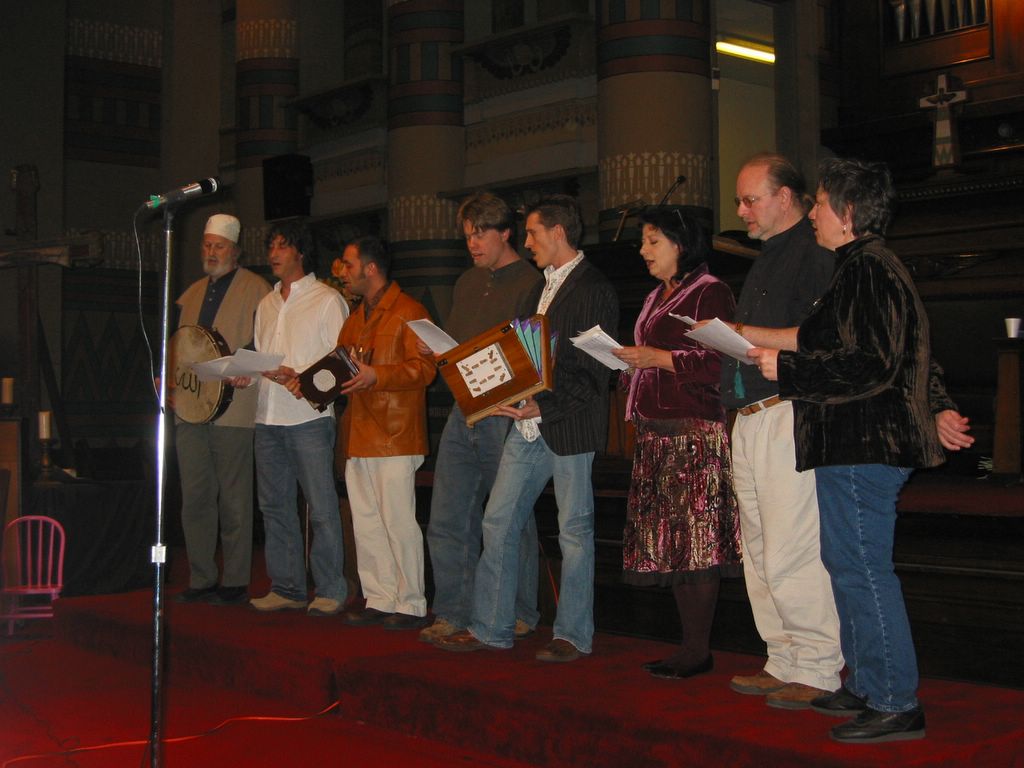
Here is a picture from our performance today at the first Nashville Interfaith Music Festival. The Sufis had the honor of being the openning act. Also presenting were:
- One Human Family Workshop Choir
- Klezmer Kidz with Jim Prendergast (Jewish)
- Upasana Choir (Hindu)
- First Unitarian Universalist Church Choir
- Bluegrass Gospel Group
Thursday, March 02, 2006
The Life of a Star
Life is full of surprises, and without a doubt, I have lived a multifarious existence. Nothing is ever certain, except the process of transmutation. Freedom is something we all long for, but in this plane there is no reprieve from the constant alchemical process of life. Identify yourself with a star fix on your horizon and many times you discover that the source of that light is long gone. The star has collapsed into itself eons ago, its light diffused, spread across the universe. Through the dance of light the impressions of this cosmic existence are forever imprinted on every being. But even in the death of a star, one sees the fullness of breath. A star inhales as it exhales...for as a star collapses under the weight of its immense brilliance, it radiates and shares its life giving essence will all of creation. This is a magnificent journey, an expansion into the inner and outer realms. Freedom comes when one learns to be thankful for each breath, each step on the expedition to self discovery. The destination has always been the point of origin, this will never change. The real gift is in the journey, towards the capacity to see with full clarity, another Oneself reflected in the mirror of life.
Sunday, February 26, 2006
Ilahis at the Presbyterian Church

The Presbyterian Church in downtown Nashville has invited the local Sufis to share some of our rituals at an interfaith event next Sunday (March 5). I have been a Sufi for more than 10 years and strange enough it will be the first time that I am participating in sharing our beautiful and sacred practices in this manner. This is something to look forward to. It is always a blessing when one is able to contribute to an event that celebrates the many paths leading to Oneness.
Before meeting with my fellow dervishes this evening, I had the opportunity to enjoy a quiet, meditative walk in Shelby Park. Thankfully, there were hardly any people out. I usually spend this time doing the purification breaths. The purification breaths, also called the Purification of the Elements, are a basic teaching of the Sufi Order. Of all the elemental breaths, I most often gravitate towards water. The water breath always seems to help me most when I need to get centered or change my rhythm. In Sufi teaching, water symbolizes purity and vitality. It points us in the direction of the archetypes that set our creative vision free so that we are able to go beyond the boundaries of our conditioning.
Tonight, the dervishes focused on selecting and rehearsing Ilahis (sacred songs/poems) for the upcoming event. There will probably be 10 of us presenting and because of time constraints we will not do a full Zikr. Most of what will be offered will be from the Halveti-Jerrahi Order. Though many of these hymns originated in Turkey and the Middle East, we will be presenting them in English (except for a couple of songs). Thankfully, the late Shaykh Nur al Jerrahi left us with magnificent interpretations of the original Turkish/Arabic.
The Ilahis are very special to me. They have been a very powerful way to keep in a state of remembrance. It is amazing how an Ilahi can stay with one for days, keeping a dervish in constant meditation. Many Ilahis are deep and mystical at the onset, making them difficult for the uninitiated to understand. Some carry a simple message, though the message deepens as the heart of the dervish expands. In essence, they are helpful at peeling away the layers of the ego (nafs), so that the veils that keep one from one’s Beloved are gently pulled away.
Our offering will start with the drone of the Shruti Box, which is not traditionally used by the Jerrahi Sufis. It is, however, an instrument close to the hearts of several dervishes here in the Nashville community. We will sing several sacred hymns building to a short, but powerful chant and end with a salawat to the Prophet Muhammad.
Wednesday, December 28, 2005
Universal Sufism
Today, I was looking at some old emails in my overstuffed inbox. It was nice going through messages sent by old friends. It was like opening a time capsule, looking at the reflection of my past. While going through my inbox, I came across an email sent by Hafizullah, a Sufi sister, that I would like to share. The following is her take on Universal Sufism, the form of Sufism I practice.
Dear Friends:
I don't know what "Universal Sufism" is exactly, but I can give some background that may be helpful.
Pir-o-Murshid Inayat Khan (ra) was perhaps the first public Sufi teacher in the West and one of the first to bring what might be called "universal Sufism." Since his time, there have been others, Sayyed Idries Shah being one. He grew up and was trained in the four major Orders of Sufism in India; recent inter-religious strife notwithstanding, India has a long history of religious tolerance.
The Turkish incursions to India in the 12th Century CE were not to spread Islam but basically just a land grab; the local people were allowed to keep their religion, and many Hindu princes became vassals of the Turkish (they weren't "Mughals" yet) conquerors, retaining both their religion and their holdings. When Hazrat Khwaja Moinuddin Chishti (ra) came to India from Khorasan during this time, he recognized the deep spirituality in the Hindu and Buddhist yogis. (Hinduism actually has a secret doctrine of the Unity of God that is taught only to the Brahmin caste.) Khwaja Moinuddin learned Sanskrit in order to discourse with the Brahmins and was impressed enough with the yogic techniques of spiritual practice that he laundered and incorporated some of them into his teaching. He also began the practice of accepting initiates regardless of their birth religion without asking them to convert. Many of them did convert, impressed as they were with the being of Moinuddin Chishti; also, Islam does not support a caste system - something very attractive to the disenfranchised lower castes.
The tradition of accepting initiates regardless of religion without asking conversion was made official policy when Hazrat Nizamuddin Auliya (ra)became the pir of the Chishti Order in India, and this became *written* policy of the Nizami branch of the Chishtiyya about 300 years ago. So, as far as the Indian Chishtis are concerned, the question of whether one has to be a practicing Muslim to be a proper Sufi was settled a long time ago.
Inayat Khan grew up in an atmosphere of not just religious tolerance but really, inter-religious respect. He kept a Bible by his bedside as well as the Quran, and even prayed in Hindu temples. Additionally, the Chishti teachings are metaphysical/esoteric in a way that is much more explicit than in some Orders, and focus upon the mechanics of the subtle energies and of deep consciousness that is not framed in a religious "languaging" but can illuminate the religious formulations in a particular way. This manner of teaching makes the underlying unity of spiritual practice and also what Inayat Khan termed the fundamental "unity of religious ideals" much easier to see than when one is limited to language and mental constructs. The Indian perspective of seeing the world's prophets as a continuum of bringing the same basic message to humanity was very much a part of his spiritual ethos, the Hindu "gods" (Krishna, Shiva, etc.) being actual historical persons who were prophets in their time.
So, the Sufism brought to the West by Inayat Khan was seen as based not upon religion as it is usually understood but upon something implicit in the fundamental structure of the human being which transcends time, space, mind, language, and certainly culture. "Religions" as they are usually practiced are the reified, one might almost say "waste products," of a divine gift to humanity that was once very much alive on all the planes of existence, and which either revivified the existing religious forms or did away with them. Even though the religions founded by "the followers of the followers" of a prophet have become static and rigid, the *beings* of the prophets themselves are still enormously alive on the inner planes and can be contacted through pure intent and spiritual practice, thus informing ones life and consciousness in an ever-deepening way.
Inayat Khan did not wish to make a mish-mash homogeneity of the religions, but to recognize and honor the unique purpose of every soul and its unique relationship to a Prophet. The manner of spiritual practice is a matter for the esoteric school and is between the guide and the student; the manner of *religious* practice is a matter between each soul and God, such that the religious practice and the spiritual practice of each of us eventually becomes unified in the heart and not something subject to external prescription/coercion. (I think of Quran 2:256 in this connection.)
As I see it, Islamic Sufism seeks to make the religion alive from the outside in; through spiritual practice (riyazat), one finds deeper and deeper meaning in the religious forms and practices. Perhaps "Universal Sufism" seeks to purify the being from the inside out, and many "universal Sufis" have found great meaning in the once-repudiated religion of their birth through their involvement with Sufi practice, and some have found a deep connection to a religion other than the one into which they were born.
In the final analysis, each soul belongs only to God, not to a masjid, temple, church, or Prophet, exalted though they be.
Dear Friends:
I don't know what "Universal Sufism" is exactly, but I can give some background that may be helpful.
Pir-o-Murshid Inayat Khan (ra) was perhaps the first public Sufi teacher in the West and one of the first to bring what might be called "universal Sufism." Since his time, there have been others, Sayyed Idries Shah being one. He grew up and was trained in the four major Orders of Sufism in India; recent inter-religious strife notwithstanding, India has a long history of religious tolerance.
The Turkish incursions to India in the 12th Century CE were not to spread Islam but basically just a land grab; the local people were allowed to keep their religion, and many Hindu princes became vassals of the Turkish (they weren't "Mughals" yet) conquerors, retaining both their religion and their holdings. When Hazrat Khwaja Moinuddin Chishti (ra) came to India from Khorasan during this time, he recognized the deep spirituality in the Hindu and Buddhist yogis. (Hinduism actually has a secret doctrine of the Unity of God that is taught only to the Brahmin caste.) Khwaja Moinuddin learned Sanskrit in order to discourse with the Brahmins and was impressed enough with the yogic techniques of spiritual practice that he laundered and incorporated some of them into his teaching. He also began the practice of accepting initiates regardless of their birth religion without asking them to convert. Many of them did convert, impressed as they were with the being of Moinuddin Chishti; also, Islam does not support a caste system - something very attractive to the disenfranchised lower castes.
The tradition of accepting initiates regardless of religion without asking conversion was made official policy when Hazrat Nizamuddin Auliya (ra)became the pir of the Chishti Order in India, and this became *written* policy of the Nizami branch of the Chishtiyya about 300 years ago. So, as far as the Indian Chishtis are concerned, the question of whether one has to be a practicing Muslim to be a proper Sufi was settled a long time ago.
Inayat Khan grew up in an atmosphere of not just religious tolerance but really, inter-religious respect. He kept a Bible by his bedside as well as the Quran, and even prayed in Hindu temples. Additionally, the Chishti teachings are metaphysical/esoteric in a way that is much more explicit than in some Orders, and focus upon the mechanics of the subtle energies and of deep consciousness that is not framed in a religious "languaging" but can illuminate the religious formulations in a particular way. This manner of teaching makes the underlying unity of spiritual practice and also what Inayat Khan termed the fundamental "unity of religious ideals" much easier to see than when one is limited to language and mental constructs. The Indian perspective of seeing the world's prophets as a continuum of bringing the same basic message to humanity was very much a part of his spiritual ethos, the Hindu "gods" (Krishna, Shiva, etc.) being actual historical persons who were prophets in their time.
So, the Sufism brought to the West by Inayat Khan was seen as based not upon religion as it is usually understood but upon something implicit in the fundamental structure of the human being which transcends time, space, mind, language, and certainly culture. "Religions" as they are usually practiced are the reified, one might almost say "waste products," of a divine gift to humanity that was once very much alive on all the planes of existence, and which either revivified the existing religious forms or did away with them. Even though the religions founded by "the followers of the followers" of a prophet have become static and rigid, the *beings* of the prophets themselves are still enormously alive on the inner planes and can be contacted through pure intent and spiritual practice, thus informing ones life and consciousness in an ever-deepening way.
Inayat Khan did not wish to make a mish-mash homogeneity of the religions, but to recognize and honor the unique purpose of every soul and its unique relationship to a Prophet. The manner of spiritual practice is a matter for the esoteric school and is between the guide and the student; the manner of *religious* practice is a matter between each soul and God, such that the religious practice and the spiritual practice of each of us eventually becomes unified in the heart and not something subject to external prescription/coercion. (I think of Quran 2:256 in this connection.)
As I see it, Islamic Sufism seeks to make the religion alive from the outside in; through spiritual practice (riyazat), one finds deeper and deeper meaning in the religious forms and practices. Perhaps "Universal Sufism" seeks to purify the being from the inside out, and many "universal Sufis" have found great meaning in the once-repudiated religion of their birth through their involvement with Sufi practice, and some have found a deep connection to a religion other than the one into which they were born.
In the final analysis, each soul belongs only to God, not to a masjid, temple, church, or Prophet, exalted though they be.
Friday, October 07, 2005
Chanting with Dervishes & a Meal with the Homeless
It is past 10 in the evening (Friday, September 30) and I am sitting at Fido’s (a coffee shop on 21st Avenue, 2 blocks from my office) recalling the magic of the last few hours… Before leaving work close to six hours ago, I changed into my fatigues, a blue t-shirt and a comfortable pair of cross trainers. I brought a change of clothes to work knowing what my mission for the night would be: find a homeless person, buy them dinner and learn a little bit about their life.
Today was a strange mix of totally synchronistic events with a few consistent, but easily overcome road blocks. I hit almost every traffic light on my way to work, forgot my pager and my mobile phone, I was late for two of my meetings and for the one I was on time for, the neurosurgeon I was meeting didn’t show. Thankfully, I did get to speak with him later in the afternoon. Aside from all that, it was an enchanting day. I was asked to attend the first Outpatient Order Entry Committee meeting and had more than enough to contribute. My team also put together a very successful educational luncheon on Deep Brain Stimulation (I think this will be the first of a series).
Today was a strange mix of totally synchronistic events with a few consistent, but easily overcome road blocks. I hit almost every traffic light on my way to work, forgot my pager and my mobile phone, I was late for two of my meetings and for the one I was on time for, the neurosurgeon I was meeting didn’t show. Thankfully, I did get to speak with him later in the afternoon. Aside from all that, it was an enchanting day. I was asked to attend the first Outpatient Order Entry Committee meeting and had more than enough to contribute. My team also put together a very successful educational luncheon on Deep Brain Stimulation (I think this will be the first of a series).

Aerial view of the Bicentennial Mall.
I must say the real magic though, didn't start until I called Carey James, also known to me by his Sufi name Nur Ashki al Jerrahi. I called Nur because I didn't have my phone and I couldn't get hold of Emily, who I was to complete tonights mission with. I told Nur the plan and invited him to join us. He agreed, but asked me to meet him at the Bicentennial Mall (a state park, not a shopping center) for an enchanting experience. I asked him to call Em and established the park as our meeting spot.

Schematic drawing of the Bicentennial Mall.
A couple of days earlier David Coots, who is a 32nd degree Mason and a new initiate of the Chishti Order of Sufis shared a mystical place with Nur. And it was this place that Nur in turn wanted to share with us. Incidentally, David's newly given Sufi name is Sarmad Chishti. According to my Sufi teacher Hazrat Inayat Khan: abstract sound is called Saut-i Sarmad by the Sufis; all space is filled with it. The vibrations of this sound are too fine to be either audible or visible to the material ears or eyes, since it is even difficult for the eyes to see the form and color of the ethereal vibrations on the external plane.
The sound of the abstract is called Anahad in the Vedas, meaning unlimited sound. The Sufis name it Sarmad, which suggests the idea of intoxication. The word intoxication is here used to signify upliftment, the freedom of the soul from its earthly bondage. Those who are able to hear the Saut-i Sarmad and meditate on it are relieved from all worries, anxieties, sorrows, fears and diseases; and the soul is freed from captivity in the senses and in the physical body. The soul of the listener becomes the all-pervading consciousness, and his spirit becomes the battery which keeps the whole universe in motion.
Some train themselves to hear the Saut-i Sarmad in the solitude on the sea shore, on the river bank, and in the hills and dales; others attain it while sitting in the caves of the mountains, or when wandering constantly through forests and deserts, keeping themselves in the wilderness apart from the haunts of men. Yogis and ascetics blow Sing (a horn) or Shankha (a shell), which awakens in them this inner tone. Dervishes play Nai or Algosa (a double flute) for the same purpose. The bells and gongs in the churches and temples are meant to suggest to the thinker the same sacred sound, and thus lead him towards the inner life.
When I got to the park I found Nur, Emily, Leah and Olivia waiting. At the apex of the Bicentennial Mall is a circular courtyard surrounded by the pillars containing the largest Carillon Bells in the world. The very epicenter of this is marked by an inconspicuous nail. Nur demonstrated that if you sit directly on this center point (on the nail), even the slightest sound you made came back to you with the most amazing harmonics. If you are even slightly off center, relative to the rest of the courtyard, everything sounds absolutely normal. Amazing, considering we were sitting outdoors, in the open.

Nur, Emily and I, sat at the center facing outwards. Our back against each others, we aligned ourselves to the 3 stars surrounding the center. Nur started playing the Shrutti Box (a drone instrument very similar to a harmonium) and we started a wonderful, enthralling chant. A chant that reverberated and responded to us in ways I haven't heard before. What a treat!

When we were done, we discussed the task at hand. Surprisingly, a Middle Eastern looking fellow taking pictures heard our discussion and decided to financial contribute to our mission. It was a very nice gesture. We all got in our vehicles and headed to Nur's home to drop off Leah and little Olivia. Incidentally, I had to give Nur a jump start.

The Parthenon at Nashville's Centennial Park.
At Nur’s, we decided to pile into my van and conveniently take one vehicle. Strange enough, it was not easy trying to find homeless people. Our first stop, Centennial Park, left us dry. We combed the park and couldn’t find a single homeless person. While we're on the subject, Centennial Park contains a full replica of the Parthenon in Greece, including a huge, beautifully gold leafed statue of Athena.

After a little deliberation, we decided to head downtown and park at the library. When we got there the library was closed, but we were able to grab a free parking spot right by it. Right across from the library was a little city park, and there finally we found a group of friendly homeless people. We asked them if they wanted to eat and we got a resounding yes!
At that time almost everything downtown was closed. The few places that were open would not serve our guests. We left our new friends were we found them and told them we would bring them back some food. After a short discussion in the car, we headed for Subway, the healthier choice. Rightfully so, Emily did not feel good about getting them a fat ridden happy meal from McDonalds.
At Subways, we purchased a variety of foot long subs. The Indian couple who ran the store was quite pleasant. We then went to a convenience store to load up on chips, orange juice and ice tea. Within a few minutes, we were back with our friends. It was interesting to note that at this point they were no longer in the tiny city park. Apparently, because it was dusk, they would have been arrested if they stayed in the park.
Our little dervish Nur began spreading out our food and drinks by the sidewalk. Each person took a sandwich of their choosing. We had turkey, ham, chicken and crab salad. There was more than enough to go around.
Like any other dinner, there was wonderful conversation. I spent most of the time conversing with Bones. Though if you met him, the last thing you would think of is bones. He was a heavyset gentleman, who just a few weeks ago was faced with the prospect of losing his leg. A wound he got developed into a full blown infection. He said a few days back he had maggots were the infection was. Luckily, an antibiotic given to him by a physician was working its charm. He offered to show me the wound, but I didn’t think that would be wise in the middle of dinner.
Bones called himself a tramp. I wasn’t quite sure what he meant so I asked him to explain. He said that the are 3 kinds of homeless people who ride the trains: hobos, tramps and bums. Hobos stay close to the tracks, they don’t usually beg for money. Usually, all they want is food and a place to stay. Hobos do not stay in one town for very long. Bums beg, cheat and steal. They always have some scam going and are the ones who have the most negative impact on how the rest of the world views homeless people. And lastly, tramps do odd jobs whenever they get into a town. They find work when they need money; sometimes working n farms, sometimes washing dishes.
I also learned that the people who train hop inconspicuously mark the houses along the tracks based on how kind the people who live there are. Bones showed me the various symbols they use to designate whether one may be inclined to provide food or shelter, or if the owner is someone who meets you at the door with a gun.
Just like in the cities, he also has to contend with “train gangs” of which there are two. The gangs identify themselves with either a blue bandanna or a turquoise bandanna. When riding the trains you want to be sure that you never allow anyone from either of these gangs to get into your car, because they will toss you overboard and take the little that you have while you are asleep.
Bones was in the military and when he got out, he took a job just like everyone else. One day, he decided that he wanted to travel and leave behind the day to day drudgery and rat race that most of us are a part of. That is why he is a tramp, he has chosen this lifestyle. He likes sleeping outside and can’t remember the last time he was indoors. He has been doing this for 16 year on and off and has done it continuously for the last 6. From what I can tell he has no plans of slowing down. Despite his infection he wanted to jump the next train headed for Arizona (the weather is warmer there in the winter). I advised him to listen to his physician and wait until his wounds have completely healed. I wasn’t so sure that he was going to listen.
Another person I spoke to briefly was Andrew. He is a young man who came to Nashville chasing a dream, looking for a better life. In short, he ran out of money before he could get settled. He said that he will probably be joining Bones on his adventures.
Andrew had a bandage from a injury he got a few nights earlier. Someone, another homeless person who has been harassing them, threw a brick at him. When they reported the incident to the police, the police made it clear that it was not their job to protect the homeless but to encourage them to leave the city. It is sad, but frankly I am not surprised.
The last person I will talk about is Emma. Emma was a sweet old bag lady who liked to smile, but it was clear that she didn’t have it all together. She had a difficult time putting her thoughts into words. She was quiet for most of the dinner. Toward the end she got a little cold and asked if anyone had a jacket. Unfortunately, we didn’t have any to offer. Like most older people she needed to get to bed early, so she said her farewells and rolled her little cart down the sidewalk to her sleeping spot a couple of blocks away. She did manage to call a friend that night on Nur’s phone. Whoever it was said they would come and get her the next day.
It was humbling and beautiful to see the dignity and humanity that was expressed by these children of god. They took good care of each other even though theirs was a temporary association. The residents of the city are scared of them, some of the other homeless people harass them and the police don’t want them around. Wherever they turn, it is made clear they are not welcome. They have no one else to advocate their cause and some of them had no family to turn to. It is an existence that the majority of us are blind to. I must admit, even with the small glimpse I caught from the brief time I spent with the group, I can’t even begin to imagine the life they live.
Shortly after our dinner a black, homeless, Baptist preacher gave us a long sermon. I can’t really share much about what he said. It’s all a big blur at this point. He took all the food that was left. Our friends didn’t have any problem sharing this with him. Like many preachers, he monopolized the rest of the conversation. After a few minutes and a prayer with the holy man, we decided to say goodbye to everyone. Nur, Em and I were happy and content. It was a magnificent evening; One that I will remember for many years to come.
At that time almost everything downtown was closed. The few places that were open would not serve our guests. We left our new friends were we found them and told them we would bring them back some food. After a short discussion in the car, we headed for Subway, the healthier choice. Rightfully so, Emily did not feel good about getting them a fat ridden happy meal from McDonalds.
At Subways, we purchased a variety of foot long subs. The Indian couple who ran the store was quite pleasant. We then went to a convenience store to load up on chips, orange juice and ice tea. Within a few minutes, we were back with our friends. It was interesting to note that at this point they were no longer in the tiny city park. Apparently, because it was dusk, they would have been arrested if they stayed in the park.
Our little dervish Nur began spreading out our food and drinks by the sidewalk. Each person took a sandwich of their choosing. We had turkey, ham, chicken and crab salad. There was more than enough to go around.
Like any other dinner, there was wonderful conversation. I spent most of the time conversing with Bones. Though if you met him, the last thing you would think of is bones. He was a heavyset gentleman, who just a few weeks ago was faced with the prospect of losing his leg. A wound he got developed into a full blown infection. He said a few days back he had maggots were the infection was. Luckily, an antibiotic given to him by a physician was working its charm. He offered to show me the wound, but I didn’t think that would be wise in the middle of dinner.
Bones called himself a tramp. I wasn’t quite sure what he meant so I asked him to explain. He said that the are 3 kinds of homeless people who ride the trains: hobos, tramps and bums. Hobos stay close to the tracks, they don’t usually beg for money. Usually, all they want is food and a place to stay. Hobos do not stay in one town for very long. Bums beg, cheat and steal. They always have some scam going and are the ones who have the most negative impact on how the rest of the world views homeless people. And lastly, tramps do odd jobs whenever they get into a town. They find work when they need money; sometimes working n farms, sometimes washing dishes.
I also learned that the people who train hop inconspicuously mark the houses along the tracks based on how kind the people who live there are. Bones showed me the various symbols they use to designate whether one may be inclined to provide food or shelter, or if the owner is someone who meets you at the door with a gun.
Just like in the cities, he also has to contend with “train gangs” of which there are two. The gangs identify themselves with either a blue bandanna or a turquoise bandanna. When riding the trains you want to be sure that you never allow anyone from either of these gangs to get into your car, because they will toss you overboard and take the little that you have while you are asleep.
Bones was in the military and when he got out, he took a job just like everyone else. One day, he decided that he wanted to travel and leave behind the day to day drudgery and rat race that most of us are a part of. That is why he is a tramp, he has chosen this lifestyle. He likes sleeping outside and can’t remember the last time he was indoors. He has been doing this for 16 year on and off and has done it continuously for the last 6. From what I can tell he has no plans of slowing down. Despite his infection he wanted to jump the next train headed for Arizona (the weather is warmer there in the winter). I advised him to listen to his physician and wait until his wounds have completely healed. I wasn’t so sure that he was going to listen.
Another person I spoke to briefly was Andrew. He is a young man who came to Nashville chasing a dream, looking for a better life. In short, he ran out of money before he could get settled. He said that he will probably be joining Bones on his adventures.
Andrew had a bandage from a injury he got a few nights earlier. Someone, another homeless person who has been harassing them, threw a brick at him. When they reported the incident to the police, the police made it clear that it was not their job to protect the homeless but to encourage them to leave the city. It is sad, but frankly I am not surprised.
The last person I will talk about is Emma. Emma was a sweet old bag lady who liked to smile, but it was clear that she didn’t have it all together. She had a difficult time putting her thoughts into words. She was quiet for most of the dinner. Toward the end she got a little cold and asked if anyone had a jacket. Unfortunately, we didn’t have any to offer. Like most older people she needed to get to bed early, so she said her farewells and rolled her little cart down the sidewalk to her sleeping spot a couple of blocks away. She did manage to call a friend that night on Nur’s phone. Whoever it was said they would come and get her the next day.
It was humbling and beautiful to see the dignity and humanity that was expressed by these children of god. They took good care of each other even though theirs was a temporary association. The residents of the city are scared of them, some of the other homeless people harass them and the police don’t want them around. Wherever they turn, it is made clear they are not welcome. They have no one else to advocate their cause and some of them had no family to turn to. It is an existence that the majority of us are blind to. I must admit, even with the small glimpse I caught from the brief time I spent with the group, I can’t even begin to imagine the life they live.
Shortly after our dinner a black, homeless, Baptist preacher gave us a long sermon. I can’t really share much about what he said. It’s all a big blur at this point. He took all the food that was left. Our friends didn’t have any problem sharing this with him. Like many preachers, he monopolized the rest of the conversation. After a few minutes and a prayer with the holy man, we decided to say goodbye to everyone. Nur, Em and I were happy and content. It was a magnificent evening; One that I will remember for many years to come.
Thursday, September 15, 2005
The One Alone
I was filled with wonder and amazement when I first came upon Muhyiddin Ibn 'Arabi's manuscript, "The One Alone." I carried it around for awhile, taking it on long trips back when I was travelling up and down the east coast and sometimes out west. Ibn 'Arabi is known as the "Shaykh al Akbar" or the greatest shaykh of Sufism. Without a doubt he has mastered the path of knowledge, a fully realized teacher of gnosis.
Ibn 'Arabi's works contain wondrous secrets on the inner workings of creation. His teachings are gifts that peel away veil after veil, speaking from essence to essence. Presented here is an excerpt from his essay, "The One Alone." It contains some of the most advanced teachings in Sufism. This truth is not easy to comprehend and for most may be very difficult to digest, but Ibn 'Arabi reveals this light as plainly as it can be offered. Open of your heart, it already understand this truth.
Know that He is never in anything, nor is anything in Him. He is neither inside nor outside of anything. None can see Him, whether with the eyes of the head or with the inner eye; nor can any conceive Him with senses, knowledge, mind, intelligence or imagination. Only He can see Himself; only He can conceive Himself. None can know Him; only He can know Himself. He sees Himself by Himself; He conceives Himself by Himself; He knows Himself by Himself. None other than He can see Him. None other than He can know Him. That which hides Him is His oneness. None but Himself can hide Him. The veil that hides Him is His own being.
He is not within you; nor are you in Him. He does not exclude you, nor are you excluded from Him. When you are addressed as you, do not think that you exist, with an essence and qualities and attributes; for you never existed, nor do exist, norever will exist. You have not entered into Him, nor He into you. Without being, your essence is with Him and in Him. Without having any identity, you are Him and He is you. If you know yourself as nothing, then you truly know your Lord. Otherwise, you truly know Him not.
You cannot know your Lord by making yourself nothing. Many a wise man claims that in order to know one's Lord one must denude oneself of the signs of one's existence, efface one's identity, finally rid oneself of one's self. This is a mistake. How could a thing that does not exist try to get rid of its existence?
If you think that to know Allah depends on you ridding yourself of yourself, then you are guilty of attributing partners to Him, the only unforgivable sin; because you are claiming that there is another existence besides Him, the all-existent; that there is a you and a He.
You presume others to be other than Allah. There is nothing other than He, but you do not know this. While you are looking at Him you do not recognize Him. When the secret opens to you, you will know that you are none other than He. Then you will also know that you are the one whom He wished, and that you are forever and will not disappear with time, for there is no passing of time. Your attributes are His. Without doubt, your appearance is His appearance.
Therefore, do not think anymore that you need to become nothing, that you need to annihilate yourself in Him. If you thought so, then you would be His veil, while a veil over Allah is other than He. How could you be a veil that hides Him? What hides Him is His being the One Alone.
The condition for self-knowledge is to know that if you had a being of your own, independent of other being, then you would neither have need to annihilate yourself in Allah nor to know yourself. You would have been, as yourself, a God, self-existent; while it is Allah Most High that is free from the existence of any other God but Himself.
And when you come to know yourself, you will be sure that you neither exist nor do not exist, whether now, or before, or in the future. This is the meaning of "la ilaha illa Llah," There is no God but Allah, there is no being but His, nor any other except Him, and He is the only One.
Know that this existence is neither you nor other than you. You do not exist; yet you are also not a nonexistence. Your existence is not someone else; nor does your nonexistence make you someone else. Without being and without not-being, your existence and your nonexistence is Allah's being.
The void is a mirror; creation is the image in it. Man is as the eye of the image reflected in the mirror; the One who is reflected in the image is hidden in the pupil of that eye. Thus He sees Himself.
Is one to consider a decaying corpse or excrement as God? Allah most high is beyond and free from such associations. We address those who do not see a corpse as a corpse or excrement as excrement.
Then when you see what is around you as not other-than-you, and all and everything as the existence of the One; when you do not see anything else with Him or in Him; but see Him in everything as yourself and at the same time as the nonexistence of yourself; then what you see is the Truth.
That is why the utterance became permissible for Mansur Al-Hallaj when the words, "I am the Truth!" came from his lips; and for Abu Yazid Al-Bistami when he cried, "Praise be to Me, the essence, absolved of all defect!" These are not people who have annihilated themselves in Allah; nor have they come to be in Allah. They are eternal. They never ceased to be, for they never were, since there is only Allah's self, Allah's essence.
So if someone says, "I am the Truth!," do not hear it from any other than from the Truth Himself; for it is not a man who says it, it is the word of Allah. That man who utters these words is nothing but an image reflected in an empty mirror, one of the infinite attributes of Allah. The reflection is the same as that which is being reflected, and the words of the image are the reflected words of the Real One.
Excerpts from "The One Alone," a treatise by 13th-century Sufi master Muhyiddin Ibn 'Arabi. The whole essay is only 20 pages, and is a marvel of precision and intensity.
Ibn 'Arabi's works contain wondrous secrets on the inner workings of creation. His teachings are gifts that peel away veil after veil, speaking from essence to essence. Presented here is an excerpt from his essay, "The One Alone." It contains some of the most advanced teachings in Sufism. This truth is not easy to comprehend and for most may be very difficult to digest, but Ibn 'Arabi reveals this light as plainly as it can be offered. Open of your heart, it already understand this truth.
Know that He is never in anything, nor is anything in Him. He is neither inside nor outside of anything. None can see Him, whether with the eyes of the head or with the inner eye; nor can any conceive Him with senses, knowledge, mind, intelligence or imagination. Only He can see Himself; only He can conceive Himself. None can know Him; only He can know Himself. He sees Himself by Himself; He conceives Himself by Himself; He knows Himself by Himself. None other than He can see Him. None other than He can know Him. That which hides Him is His oneness. None but Himself can hide Him. The veil that hides Him is His own being.
He is not within you; nor are you in Him. He does not exclude you, nor are you excluded from Him. When you are addressed as you, do not think that you exist, with an essence and qualities and attributes; for you never existed, nor do exist, norever will exist. You have not entered into Him, nor He into you. Without being, your essence is with Him and in Him. Without having any identity, you are Him and He is you. If you know yourself as nothing, then you truly know your Lord. Otherwise, you truly know Him not.
You cannot know your Lord by making yourself nothing. Many a wise man claims that in order to know one's Lord one must denude oneself of the signs of one's existence, efface one's identity, finally rid oneself of one's self. This is a mistake. How could a thing that does not exist try to get rid of its existence?
If you think that to know Allah depends on you ridding yourself of yourself, then you are guilty of attributing partners to Him, the only unforgivable sin; because you are claiming that there is another existence besides Him, the all-existent; that there is a you and a He.
You presume others to be other than Allah. There is nothing other than He, but you do not know this. While you are looking at Him you do not recognize Him. When the secret opens to you, you will know that you are none other than He. Then you will also know that you are the one whom He wished, and that you are forever and will not disappear with time, for there is no passing of time. Your attributes are His. Without doubt, your appearance is His appearance.
Therefore, do not think anymore that you need to become nothing, that you need to annihilate yourself in Him. If you thought so, then you would be His veil, while a veil over Allah is other than He. How could you be a veil that hides Him? What hides Him is His being the One Alone.
The condition for self-knowledge is to know that if you had a being of your own, independent of other being, then you would neither have need to annihilate yourself in Allah nor to know yourself. You would have been, as yourself, a God, self-existent; while it is Allah Most High that is free from the existence of any other God but Himself.
And when you come to know yourself, you will be sure that you neither exist nor do not exist, whether now, or before, or in the future. This is the meaning of "la ilaha illa Llah," There is no God but Allah, there is no being but His, nor any other except Him, and He is the only One.
Know that this existence is neither you nor other than you. You do not exist; yet you are also not a nonexistence. Your existence is not someone else; nor does your nonexistence make you someone else. Without being and without not-being, your existence and your nonexistence is Allah's being.
The void is a mirror; creation is the image in it. Man is as the eye of the image reflected in the mirror; the One who is reflected in the image is hidden in the pupil of that eye. Thus He sees Himself.
Is one to consider a decaying corpse or excrement as God? Allah most high is beyond and free from such associations. We address those who do not see a corpse as a corpse or excrement as excrement.
Then when you see what is around you as not other-than-you, and all and everything as the existence of the One; when you do not see anything else with Him or in Him; but see Him in everything as yourself and at the same time as the nonexistence of yourself; then what you see is the Truth.
That is why the utterance became permissible for Mansur Al-Hallaj when the words, "I am the Truth!" came from his lips; and for Abu Yazid Al-Bistami when he cried, "Praise be to Me, the essence, absolved of all defect!" These are not people who have annihilated themselves in Allah; nor have they come to be in Allah. They are eternal. They never ceased to be, for they never were, since there is only Allah's self, Allah's essence.
So if someone says, "I am the Truth!," do not hear it from any other than from the Truth Himself; for it is not a man who says it, it is the word of Allah. That man who utters these words is nothing but an image reflected in an empty mirror, one of the infinite attributes of Allah. The reflection is the same as that which is being reflected, and the words of the image are the reflected words of the Real One.
Excerpts from "The One Alone," a treatise by 13th-century Sufi master Muhyiddin Ibn 'Arabi. The whole essay is only 20 pages, and is a marvel of precision and intensity.
Wednesday, September 14, 2005
The Murshid is Everywhere
I was reading Hazrat Inayat Khan's teachings on initiation and discipleship and came across the following passages. It is a blessing to be able to look back on my life and see how often the windows of knowledge and inspiration were open when there was an openness to learning and a free flow of love between two beings. Very often this is how spiritual transmission manifests and is communicated, from one heart to another; with the former playing the role of the messenger. Spiritually, we learn most from those we are open to, those that we love.
If a person does not become enlightened, then one can find the explanation by watching the rain. It falls upon all trees, but it is according to the response of those trees that they grow and bear fruit. The sun shines upon all the trees, it makes no distinction between them. However, it is according to the response that the trees give to the sun that they profit by its sunshine. At the same time, a mureed (student) is very often an inspiration to the murshid (teacher). It is not the murshid who teaches, it is God who teaches. The murshid is only a medium, and as high as the response of the mureed reaches, so strongly does it attract the message of God.
The mureed can be inspired, but he can also cease to inspire. If there is no response on his side, or if there is antagonism or lack of interest, then the inspiration of the murshid is shut off; just like the clouds which cannot produce a shower when they are above the desert. The desert affects them; but when the same clouds are above the forest, the trees attract them and the rain falls.
If a person does not become enlightened, then one can find the explanation by watching the rain. It falls upon all trees, but it is according to the response of those trees that they grow and bear fruit. The sun shines upon all the trees, it makes no distinction between them. However, it is according to the response that the trees give to the sun that they profit by its sunshine. At the same time, a mureed (student) is very often an inspiration to the murshid (teacher). It is not the murshid who teaches, it is God who teaches. The murshid is only a medium, and as high as the response of the mureed reaches, so strongly does it attract the message of God.
The mureed can be inspired, but he can also cease to inspire. If there is no response on his side, or if there is antagonism or lack of interest, then the inspiration of the murshid is shut off; just like the clouds which cannot produce a shower when they are above the desert. The desert affects them; but when the same clouds are above the forest, the trees attract them and the rain falls.
Sunday, September 11, 2005
Mullah Nasruddin
Aside from poems and parables, Sufis use jokes to convey teachings. A central figure of many of these stories is the Mullah Nasruddin. We all have a Mullah Nasruddin inside each of us, but often times he is difficult to spot. Here is a little wisdom from this holy fool:
A neighbor who Nasruddin didn't like very much came over to his compound one day. The neighbor asked Nasruddin if he could borrow his donkey. Nasruddin not wanting to lend his donkey to the neighbor he didn't like told him, "I would love to loan you my donkey but only yesterday my brother came from the next town to use it to carry his wheat to the mill to be grounded. The donkey sadly is not here."
The neighbor was disappointed. But he thanked Nasruddin and began to walk away.
Just as he got a few steps away, Mullah Nasruddin's donkey, which was in the back of his compound all the time, let out a big bray.
The neighbor turned to Nasruddin and said, "Mullah Sahib, I thought you told me that your donkey was not here."
Mullah Nasruddin turned to the neighbor and said, "My friend, who are you going to believe, me or the donkey?"
A neighbor who Nasruddin didn't like very much came over to his compound one day. The neighbor asked Nasruddin if he could borrow his donkey. Nasruddin not wanting to lend his donkey to the neighbor he didn't like told him, "I would love to loan you my donkey but only yesterday my brother came from the next town to use it to carry his wheat to the mill to be grounded. The donkey sadly is not here."
The neighbor was disappointed. But he thanked Nasruddin and began to walk away.
Just as he got a few steps away, Mullah Nasruddin's donkey, which was in the back of his compound all the time, let out a big bray.
The neighbor turned to Nasruddin and said, "Mullah Sahib, I thought you told me that your donkey was not here."
Mullah Nasruddin turned to the neighbor and said, "My friend, who are you going to believe, me or the donkey?"
Wednesday, September 07, 2005
Rumifest
For years, copying other people, I tried to know myself.
From within, I couldn't decide what to do.
Unable to see, I heard my name being called.
Then I walked outside.
The breeze at dawn has secrets to tell you.
Don't go back to sleep.
You must ask for what you really want.
Don't go back to sleep.
People are going back and forth
across the doorsill where the two worlds touch.
The door is round and open.
Don't go back to sleep.
— Mevlana Celaleddin Rumi
I may be going to Rumifest at the end of the month with Muhammad Jamal (insh' Allah). I resonate with the Zikr of the Rafai Marufi Order. The Rafai are hosting this event. It will be a blessing to be around other dervishes. As Rumi very often points out longing has the power to awaken. These events are opportunities to explore the longing, feed the spirit, and be more awake.
From within, I couldn't decide what to do.
Unable to see, I heard my name being called.
Then I walked outside.
The breeze at dawn has secrets to tell you.
Don't go back to sleep.
You must ask for what you really want.
Don't go back to sleep.
People are going back and forth
across the doorsill where the two worlds touch.
The door is round and open.
Don't go back to sleep.
— Mevlana Celaleddin Rumi
I may be going to Rumifest at the end of the month with Muhammad Jamal (insh' Allah). I resonate with the Zikr of the Rafai Marufi Order. The Rafai are hosting this event. It will be a blessing to be around other dervishes. As Rumi very often points out longing has the power to awaken. These events are opportunities to explore the longing, feed the spirit, and be more awake.
Friday, July 01, 2005
Rating Your Guru
I found this amusing website called Sarlo’s Guru Rating Service. It seems to have been put together by a follower of Osho. Not surprisingly, Osho does get the highest score available. I wouldn’t take any of the information on the site seriously, but it was entertaining to read the authors comments about various teachers. Personally, I don’t think a teacher/guru can be rated in this manner. Our teachers come in many shapes and sizes, often in answer to questions we don’t even know we are asking.
It would be very difficult to convey some of the profound experiences I have had with my spiritual teachers in life. The relationship between a spiritual teacher and a student is sacred and is often hidden from the rest of the world. It is also important to remember that what is good for one person may not be good for another. That is one of the reasons why we are presented with so many different paths in life. More importantly, the real teacher is within. The guide simply shines that light on what was always there.
It would be very difficult to convey some of the profound experiences I have had with my spiritual teachers in life. The relationship between a spiritual teacher and a student is sacred and is often hidden from the rest of the world. It is also important to remember that what is good for one person may not be good for another. That is one of the reasons why we are presented with so many different paths in life. More importantly, the real teacher is within. The guide simply shines that light on what was always there.
Saturday, June 11, 2005
Your Seven Souls: A Sufi View by Robert Frager
I died from the mineral kingdom and became a plant;
I died to vegetable nature and became an animal;
I died to animality and became a human being.
Next time I will die to human nature and lift up my head among the angels.
Once again I will leave angelic nature and become that which you cannot imagine.
— Mevlana Celaleddin Rumi
According to Sufi tradition, we have seven souls, or seven facets of the complete soul. Each represents a different stage of evolution. There are the mineral, vegetable, animal, personal, human, and secret souls, and the secret of secrets.
The Sufi model of the souls is one of balance. According to this model, spiritual growth is not a matter of developing the higher souls and ignoring or even weakening the lower ones. Each soul has valuable gifts, and in Sufism, real spiritual growth means balanced development of the whole individual, including body, mind, and spirit.
There are many systems and disciplines that focus on the body—sports, martial arts, healing techniques, and a variety of other physical disciplines. Modern education focuses almost completely on the mind. Many spiritual disciplines stress spiritual principles and practices, yet they ignore mind and body. In Sufism, all of life is part of spiritual practice. Family, work, and relationships provide as much opportunity for spiritual development as prayer or contemplation.
The Arabic term for soul, ruh, also means "spirit" and "breath." The Koran (15.29) reads, "I have fashioned him (Adam) and breathed into him of My spirit (ruh)." The highest level of the soul, the secret of secrets, is a spark of God’s spirit.
Each facet of the soul has its own dynamics, its own needs and strengths. At different times, different souls may be dominant. Knowing which soul is most active is important information for a Sufi teacher. For example, a dream that comes from one soul will be interpreted very differently than a dream from another soul.
When the naturally healthy dynamics of the soul shift to one extreme or another, what is healthy can become toxic. For example, curare is a wonderful heart medicine, but it can also be used as a deadly poison.
If we are concerned about some of our souls and ignore others, we are inevitably thrown out of balance. For example, if we ignore our vegetable and animal souls, we lose touch with the fundamental needs of our bodies and put our health at risk. (A classic example are stereotypical computer programmers who are so involved with their demanding intellectual tasks that they eat junk food and suffer from chronic lack of sleep and exercise.) If we neglect our secret soul and the secret of secrets and disregard our spiritual needs, our spiritual health suffers. Many people lead lives that are rich in material success and worldly activity, yet they are spiritually malnourished. Ideally, balance of all seven souls brings about balanced health and growth and a rich, full life.
The Mineral Soul
The mineral soul, the ruh madeni, is located in the skeletal system. In the diagram of the seven aspects of the soul, the mineral soul is adjacent to the secret of secrets, which is the place of the pure divine spark within each of us. The mineral world is close to God; it never revolts against divine will. Wherever a rock is placed, there it will stay eternally unless some outside force moves it.
Just as our physical skeleton remains hidden inside the body, there is a hidden, inner structure in our bodies—the mineral soul. If someone asked for a description of your mineral soul, you probably would not know how to begin. Yet what is difficult to know, what we frequently take for granted, often is of great value.
Imbalance in the mineral soul can manifest as either extreme flexibility or extreme rigidity. We say that people "have no backbone" or are "spineless" if they are too easily swayed by influences around them. They find it hard to stick with anything or to hold a position—physically, mentally, or emotionally. One example of a lack of solid structure is the jellyfish. The boneless jellyfish is a highly successful life form that has survived and flourished for countless millennia. However, it is completely at the mercy of the tides. We would be violating our basic physical structure, which gives us the capacity for independent movement, if we behaved like the jellyfish.
The other extreme is someone who is "fossilized," calcified or unbending, rigid and unyielding, incapable of responding flexibly and appropriately to changes in the environment. Some people are "stiff-necked," too proud to bow their heads, while others are "thick-skulled," or unable to take in new information.
One definition of neurosis is to continue doing the same thing even though it does not work. Some people are so rigid that they cannot change to save their own lives. Some people know they are going to die of smoking but they can’t stop.
The Vegetable Soul
The vegetable soul, the ruh nabati, is located in the liver and is related to the digestive system. It regulates growth and the assimilation of nutrients, functions we share with plants. This is a new function, evolutionarily speaking, as the mineral world has no need of nourishment. In other words, there is a soul in us that is like the soul that God also gave to plants.
When we were in the womb, we functioned mainly from the vegetable soul. We were rooted to our mother’s uterus by the umbilical cord through which we took in nourishment. We developed and grew larger, and that was just about all that we did. Our functioning was essentially the same as that of plants.
There is tremendous intelligence within the vegetable soul. We generally overlook this intelligence because we place so much value on the abstract learning of the head. But no matter how many college degrees we might earn, we still don’t know how to digest a peach or a piece of bread. We don’t know how to make hair grow on our heads. These kinds of basic physical functions are all carried out through the age-old wisdom of the vegetable soul.
The Animal Soul
The animal soul, the ruh haywani, is located in the heart and is connected to the circulatory system. Animals have developed a four-chambered heart and a complex circulatory system that distributes blood throughout the organism. (In reptiles, the circulatory system is not yet fully developed, and the reptile heart has only three chambers. As a result, their capacity for movement is inhibited, and reptiles require warm weather to be fully active. The more developed mammalian circulatory system holds heat better, and this allows mammals to be more active in all climates.)
The animal soul includes our fears, angers, and passions. All organisms tend to move toward whatever is rewarding (passions) and to move away from (fears) or push away (angers) whatever is punishing, toxic, or painful. For years, behavioral psychology has concentrated on these fundamental responses to the world in studying the effects of reward and punishment.
As psychology has gotten more complex, we tend to forget the power and universality of the two basic instincts of attraction and repulsion. Even an amoeba will move away from a drop of acid placed on a microscope slide or move toward a drop of nutrient solution. If a single-celled organism has these responses, every cell in our bodies must have the same capacity.
These instincts are basic to self-preservation and species preservation, which first appear with the animal soul. In plants, the instincts to reproduce and survive are severely limited. They are built into the structure of the plants and are relatively rigid and unchanging.
The behavior of animals is far more flexible and responsive to the environment. The instinct for self-preservation moves us to avoid what is painful or dangerous. Plants may put forth seeds and orient to the sun, but there is no passion in the plant kingdom. Within the animal soul, passion is rooted in the reproductive instincts. In addition to sexual desire, it is the matrix of love and nurturing.
The Judeo-Christian tradition has devalued the body and the functions of the animal soul. Traditionally, it is considered unfortunate (if not outright sinful) to have a body, and it is even worse that this body of ours contains so many drives and instincts, fears, and passions. The drives of the body are considered antithetical to the development of the soul.
In the Sufi model of the seven souls, all souls have to be healthy for the individual to develop as a whole human being. We all have passions, fears, and appetites, and these are useful, functional parts of us. However, they should not dominate our lives. The animal soul needs to be in balance with the other souls, not in charge. When that balance is attained, a well-developed animal soul is an invaluable asset to our health and well-being.
The Personal Soul
The next facet of the total soul is the ruh nafsani. The personal soul is located in the brain and is related to the nervous system. Just as the development of the heart and circulatory system distinguishes the animal from the plant kingdom, the development of a complex nervous system distinguishes humans from animals. This highly developed nervous system brings the capacity for greater memory and for complex thinking and planning. The intelligence of the personal soul allows us to understand our environment far more deeply than the capacities of the mineral, vegetable, and animal souls.
It also allows us to respond more effectively to the world around us. We can plan ahead and create mental models of the possible effects of our actions. For example, in one classic psychology experiment, dogs were shown a bowl of food on the opposite side of a chain-link fence. If the fence was short, the dogs quickly and easily went around it to get to the food. As the fence got longer, the dogs had to go farther and farther away from their goal to get around the fence. When the fence section became quite long, the dogs remained rooted to the spot directly opposite the food and tried to dig under the fence.
That problem poses no difficulty for humans, including relatively young children. Because of their inability to form complex mental models, animals tend to seek immediate gratification and to be dominated by short-term motivations. The development of human intelligence has allowed us to plan far ahead and to function much more effectively in the world. As a result, humanity has become more and more powerful, dominating all other species.
The personal soul is also the location of the ego. We have both a positive and a negative ego. The positive ego organizes our intelligence and provides our sense of self. It can be a force for self-respect, responsibility, and integrity. On the other hand, the negative ego is a force for egotism, arrogance, and a sense of separation from others and God. The positive ego is a great ally on the spiritual path. It can provide a sense of inner stability during the ups and downs that inevitably occur on the spiritual path. The negative ego is an enemy. It distorts our perceptions and colors our relations to the world.
One of the major distinctions between the negative and positive egos is that the positive ego is our servant and the negative ego constantly tries to be our master. Like a donkey, the ego is meant to work for us, but all too often we seem to be carrying the ego on our backs and serving it.
The Human Soul
The ruh insani is located in the galb, the spiritual heart. The human soul is more refined than the personal soul. It is the place of compassion, faith, creativity. In one sense, the human soul includes the secret soul and the secret of secrets. It is the place of our spiritual values and experiences.
Creativity and compassion first occur at this soul level. The brain, which develops in the personal soul, is like a computer, involved mainly with storage and manipulation of data, but not with the creation of new information. Creativity happens in the heart. It is unfortunate that our educational system has become so focused on the development of intellect that little attention is given to the development of the heart, which is nourished by the arts and by worship, love, and service to others.
The heart intelligence of the human soul and the abstract intelligence of the personal soul complement each other. Thinking is concerned with impersonal, logical analysis. The heart adds compassion and faith. Combining the two leads to better judgment. The head knows what is most effective, while the heart knows what is right.
Intuitive intelligence functions without the conscious use of reason. This form of intelligence is nourished by faith in God or in the existence of a larger reality; awareness of the external world and inner awareness developed through self-observation, contemplation or meditation; and compassion and a resulting sense of attunement with nature, animals, and other people.
The Secret Soul
The ruh sirr is the part of us that remembers God. The secret soul, or inner consciousness, is located in the inner heart. This soul is the one that knows where it came from and where it is going. One Sufi teacher writes, "The inner consciousness is that which God keeps hidden, keeping watch over it Himself." Another comments, "The body is completely dark, and its lamp is the inner consciousness. If one has no inner consciousness, one is forever in darkness."
Before our souls incarnated, God said to them, "Am I your Lord?" and the souls said, "Indeed, truly." The soul that responded was the secret soul. The secret soul knew who it was then, and it still knows. For millennia, the secret souls lived in close proximity to God, bathed in the light of God’s presence. Only on incarnation into this material universe did we lose this sense of connection.
The Secret of Secrets
The sirr-ul-asrar includes that which is absolutely transcendent, beyond time and space. This is the original soul (ruh) that God breathed into Adam, that is, into humankind. It is at our core, the soul of the soul. It is the pure divine spark within us. For this reason, our image of what it is to be human needs to expand. We are not merely thinking animals, nor are we only our personalities. We are the divine encased in and intermeshed with the body and the personality. Our capacity for spiritual growth and understanding are virtually limitless.
The Sufi master Abdul-Qadir al-Jilani explains the relationship between the human soul, the secret soul, and the secret of secrets:
God Most High created the holy spirit as the most perfect creation in the first-created realm of the absolute going of His Essence, then He willed to send it to lower realms . . . to teach the holy spirit to seek . . . its previous closeness and intimacy with God. . . . On its way God sent it first to the realm of the Causal Mind. . . . As it passed through this realm it was given the clothing of divine light and was named the sultan-soul (secret of secrets). As it passed through the realm of angels . . . it received the name "moving soul" (secret soul). When it finally descended to this world of matter it was dressed in the clothing of . . . coarse matter in order to save this world, because the material world, if it had direct contact with the holy spirit, would burn to ashes. In relation to this world, it came to be known as life, the human soul.
Sheikh Muzaffer used to say, "Within you is that which completely transcends the entire universe." Each of us has within our hearts that spark of God that cannot be confined within us or contained within this world or the thousands of universes that make up the whole of physical creation. That is also us. We all need to remember who we really are.
___________________________________
Robert Frager is a professor at the Institute of Transpersonal Psychology in Palo Alto, California. He holds the PhD from Harvard University and has studied modern Japanese spirituality, Zen Buddhism, Yoga, Sufism, and mystical Christianity as a colleague of the Dominican theologian Matthew Fox. This article is extracted from his book, Heart, Self, & Soul: A Sufi Approach to Growth, Balance, and Harmony (Quest Books, 1999).
Robert Frager is also known as Sheikh Ragip al-Jerrahi in the Jerrahi Order of Sufis.
I died to vegetable nature and became an animal;
I died to animality and became a human being.
Next time I will die to human nature and lift up my head among the angels.
Once again I will leave angelic nature and become that which you cannot imagine.
— Mevlana Celaleddin Rumi
According to Sufi tradition, we have seven souls, or seven facets of the complete soul. Each represents a different stage of evolution. There are the mineral, vegetable, animal, personal, human, and secret souls, and the secret of secrets.
The Sufi model of the souls is one of balance. According to this model, spiritual growth is not a matter of developing the higher souls and ignoring or even weakening the lower ones. Each soul has valuable gifts, and in Sufism, real spiritual growth means balanced development of the whole individual, including body, mind, and spirit.
There are many systems and disciplines that focus on the body—sports, martial arts, healing techniques, and a variety of other physical disciplines. Modern education focuses almost completely on the mind. Many spiritual disciplines stress spiritual principles and practices, yet they ignore mind and body. In Sufism, all of life is part of spiritual practice. Family, work, and relationships provide as much opportunity for spiritual development as prayer or contemplation.
The Arabic term for soul, ruh, also means "spirit" and "breath." The Koran (15.29) reads, "I have fashioned him (Adam) and breathed into him of My spirit (ruh)." The highest level of the soul, the secret of secrets, is a spark of God’s spirit.
Each facet of the soul has its own dynamics, its own needs and strengths. At different times, different souls may be dominant. Knowing which soul is most active is important information for a Sufi teacher. For example, a dream that comes from one soul will be interpreted very differently than a dream from another soul.
When the naturally healthy dynamics of the soul shift to one extreme or another, what is healthy can become toxic. For example, curare is a wonderful heart medicine, but it can also be used as a deadly poison.
If we are concerned about some of our souls and ignore others, we are inevitably thrown out of balance. For example, if we ignore our vegetable and animal souls, we lose touch with the fundamental needs of our bodies and put our health at risk. (A classic example are stereotypical computer programmers who are so involved with their demanding intellectual tasks that they eat junk food and suffer from chronic lack of sleep and exercise.) If we neglect our secret soul and the secret of secrets and disregard our spiritual needs, our spiritual health suffers. Many people lead lives that are rich in material success and worldly activity, yet they are spiritually malnourished. Ideally, balance of all seven souls brings about balanced health and growth and a rich, full life.
The Mineral Soul
The mineral soul, the ruh madeni, is located in the skeletal system. In the diagram of the seven aspects of the soul, the mineral soul is adjacent to the secret of secrets, which is the place of the pure divine spark within each of us. The mineral world is close to God; it never revolts against divine will. Wherever a rock is placed, there it will stay eternally unless some outside force moves it.
Just as our physical skeleton remains hidden inside the body, there is a hidden, inner structure in our bodies—the mineral soul. If someone asked for a description of your mineral soul, you probably would not know how to begin. Yet what is difficult to know, what we frequently take for granted, often is of great value.
Imbalance in the mineral soul can manifest as either extreme flexibility or extreme rigidity. We say that people "have no backbone" or are "spineless" if they are too easily swayed by influences around them. They find it hard to stick with anything or to hold a position—physically, mentally, or emotionally. One example of a lack of solid structure is the jellyfish. The boneless jellyfish is a highly successful life form that has survived and flourished for countless millennia. However, it is completely at the mercy of the tides. We would be violating our basic physical structure, which gives us the capacity for independent movement, if we behaved like the jellyfish.
The other extreme is someone who is "fossilized," calcified or unbending, rigid and unyielding, incapable of responding flexibly and appropriately to changes in the environment. Some people are "stiff-necked," too proud to bow their heads, while others are "thick-skulled," or unable to take in new information.
One definition of neurosis is to continue doing the same thing even though it does not work. Some people are so rigid that they cannot change to save their own lives. Some people know they are going to die of smoking but they can’t stop.
The Vegetable Soul
The vegetable soul, the ruh nabati, is located in the liver and is related to the digestive system. It regulates growth and the assimilation of nutrients, functions we share with plants. This is a new function, evolutionarily speaking, as the mineral world has no need of nourishment. In other words, there is a soul in us that is like the soul that God also gave to plants.
When we were in the womb, we functioned mainly from the vegetable soul. We were rooted to our mother’s uterus by the umbilical cord through which we took in nourishment. We developed and grew larger, and that was just about all that we did. Our functioning was essentially the same as that of plants.
There is tremendous intelligence within the vegetable soul. We generally overlook this intelligence because we place so much value on the abstract learning of the head. But no matter how many college degrees we might earn, we still don’t know how to digest a peach or a piece of bread. We don’t know how to make hair grow on our heads. These kinds of basic physical functions are all carried out through the age-old wisdom of the vegetable soul.
The Animal Soul
The animal soul, the ruh haywani, is located in the heart and is connected to the circulatory system. Animals have developed a four-chambered heart and a complex circulatory system that distributes blood throughout the organism. (In reptiles, the circulatory system is not yet fully developed, and the reptile heart has only three chambers. As a result, their capacity for movement is inhibited, and reptiles require warm weather to be fully active. The more developed mammalian circulatory system holds heat better, and this allows mammals to be more active in all climates.)
The animal soul includes our fears, angers, and passions. All organisms tend to move toward whatever is rewarding (passions) and to move away from (fears) or push away (angers) whatever is punishing, toxic, or painful. For years, behavioral psychology has concentrated on these fundamental responses to the world in studying the effects of reward and punishment.
As psychology has gotten more complex, we tend to forget the power and universality of the two basic instincts of attraction and repulsion. Even an amoeba will move away from a drop of acid placed on a microscope slide or move toward a drop of nutrient solution. If a single-celled organism has these responses, every cell in our bodies must have the same capacity.
These instincts are basic to self-preservation and species preservation, which first appear with the animal soul. In plants, the instincts to reproduce and survive are severely limited. They are built into the structure of the plants and are relatively rigid and unchanging.
The behavior of animals is far more flexible and responsive to the environment. The instinct for self-preservation moves us to avoid what is painful or dangerous. Plants may put forth seeds and orient to the sun, but there is no passion in the plant kingdom. Within the animal soul, passion is rooted in the reproductive instincts. In addition to sexual desire, it is the matrix of love and nurturing.
The Judeo-Christian tradition has devalued the body and the functions of the animal soul. Traditionally, it is considered unfortunate (if not outright sinful) to have a body, and it is even worse that this body of ours contains so many drives and instincts, fears, and passions. The drives of the body are considered antithetical to the development of the soul.
In the Sufi model of the seven souls, all souls have to be healthy for the individual to develop as a whole human being. We all have passions, fears, and appetites, and these are useful, functional parts of us. However, they should not dominate our lives. The animal soul needs to be in balance with the other souls, not in charge. When that balance is attained, a well-developed animal soul is an invaluable asset to our health and well-being.
The Personal Soul
The next facet of the total soul is the ruh nafsani. The personal soul is located in the brain and is related to the nervous system. Just as the development of the heart and circulatory system distinguishes the animal from the plant kingdom, the development of a complex nervous system distinguishes humans from animals. This highly developed nervous system brings the capacity for greater memory and for complex thinking and planning. The intelligence of the personal soul allows us to understand our environment far more deeply than the capacities of the mineral, vegetable, and animal souls.
It also allows us to respond more effectively to the world around us. We can plan ahead and create mental models of the possible effects of our actions. For example, in one classic psychology experiment, dogs were shown a bowl of food on the opposite side of a chain-link fence. If the fence was short, the dogs quickly and easily went around it to get to the food. As the fence got longer, the dogs had to go farther and farther away from their goal to get around the fence. When the fence section became quite long, the dogs remained rooted to the spot directly opposite the food and tried to dig under the fence.
That problem poses no difficulty for humans, including relatively young children. Because of their inability to form complex mental models, animals tend to seek immediate gratification and to be dominated by short-term motivations. The development of human intelligence has allowed us to plan far ahead and to function much more effectively in the world. As a result, humanity has become more and more powerful, dominating all other species.
The personal soul is also the location of the ego. We have both a positive and a negative ego. The positive ego organizes our intelligence and provides our sense of self. It can be a force for self-respect, responsibility, and integrity. On the other hand, the negative ego is a force for egotism, arrogance, and a sense of separation from others and God. The positive ego is a great ally on the spiritual path. It can provide a sense of inner stability during the ups and downs that inevitably occur on the spiritual path. The negative ego is an enemy. It distorts our perceptions and colors our relations to the world.
One of the major distinctions between the negative and positive egos is that the positive ego is our servant and the negative ego constantly tries to be our master. Like a donkey, the ego is meant to work for us, but all too often we seem to be carrying the ego on our backs and serving it.
The Human Soul
The ruh insani is located in the galb, the spiritual heart. The human soul is more refined than the personal soul. It is the place of compassion, faith, creativity. In one sense, the human soul includes the secret soul and the secret of secrets. It is the place of our spiritual values and experiences.
Creativity and compassion first occur at this soul level. The brain, which develops in the personal soul, is like a computer, involved mainly with storage and manipulation of data, but not with the creation of new information. Creativity happens in the heart. It is unfortunate that our educational system has become so focused on the development of intellect that little attention is given to the development of the heart, which is nourished by the arts and by worship, love, and service to others.
The heart intelligence of the human soul and the abstract intelligence of the personal soul complement each other. Thinking is concerned with impersonal, logical analysis. The heart adds compassion and faith. Combining the two leads to better judgment. The head knows what is most effective, while the heart knows what is right.
Intuitive intelligence functions without the conscious use of reason. This form of intelligence is nourished by faith in God or in the existence of a larger reality; awareness of the external world and inner awareness developed through self-observation, contemplation or meditation; and compassion and a resulting sense of attunement with nature, animals, and other people.
The Secret Soul
The ruh sirr is the part of us that remembers God. The secret soul, or inner consciousness, is located in the inner heart. This soul is the one that knows where it came from and where it is going. One Sufi teacher writes, "The inner consciousness is that which God keeps hidden, keeping watch over it Himself." Another comments, "The body is completely dark, and its lamp is the inner consciousness. If one has no inner consciousness, one is forever in darkness."
Before our souls incarnated, God said to them, "Am I your Lord?" and the souls said, "Indeed, truly." The soul that responded was the secret soul. The secret soul knew who it was then, and it still knows. For millennia, the secret souls lived in close proximity to God, bathed in the light of God’s presence. Only on incarnation into this material universe did we lose this sense of connection.
The Secret of Secrets
The sirr-ul-asrar includes that which is absolutely transcendent, beyond time and space. This is the original soul (ruh) that God breathed into Adam, that is, into humankind. It is at our core, the soul of the soul. It is the pure divine spark within us. For this reason, our image of what it is to be human needs to expand. We are not merely thinking animals, nor are we only our personalities. We are the divine encased in and intermeshed with the body and the personality. Our capacity for spiritual growth and understanding are virtually limitless.
The Sufi master Abdul-Qadir al-Jilani explains the relationship between the human soul, the secret soul, and the secret of secrets:
God Most High created the holy spirit as the most perfect creation in the first-created realm of the absolute going of His Essence, then He willed to send it to lower realms . . . to teach the holy spirit to seek . . . its previous closeness and intimacy with God. . . . On its way God sent it first to the realm of the Causal Mind. . . . As it passed through this realm it was given the clothing of divine light and was named the sultan-soul (secret of secrets). As it passed through the realm of angels . . . it received the name "moving soul" (secret soul). When it finally descended to this world of matter it was dressed in the clothing of . . . coarse matter in order to save this world, because the material world, if it had direct contact with the holy spirit, would burn to ashes. In relation to this world, it came to be known as life, the human soul.
Sheikh Muzaffer used to say, "Within you is that which completely transcends the entire universe." Each of us has within our hearts that spark of God that cannot be confined within us or contained within this world or the thousands of universes that make up the whole of physical creation. That is also us. We all need to remember who we really are.
___________________________________
Robert Frager is a professor at the Institute of Transpersonal Psychology in Palo Alto, California. He holds the PhD from Harvard University and has studied modern Japanese spirituality, Zen Buddhism, Yoga, Sufism, and mystical Christianity as a colleague of the Dominican theologian Matthew Fox. This article is extracted from his book, Heart, Self, & Soul: A Sufi Approach to Growth, Balance, and Harmony (Quest Books, 1999).
Robert Frager is also known as Sheikh Ragip al-Jerrahi in the Jerrahi Order of Sufis.
Wednesday, May 11, 2005
Freedom from Attachment & Detachment
Lately, I have been thinking about attachment and detachment. I believe that one goes through different stages of development in ones quest for peace & happiness. Given a situation, when I am given the grace to be mindful, I try to ask myself where I stand in relation to an event, object, person, etc… This often tells me how much I can truly benefit from or give of myself when considering the situation at hand. This also presents me with the clues on opportunities for learning. There are little substitutes for experiential learning or the wisdom gained from being truly present and open.
Having stated the above, I must clarify that I don’t necessarily consider one stage more important than the other. It is always important to recognize that every impulse or situation comes from the divine and can also lead to the divine. It takes wisdom to recognize when one should be attached or detached to a certain condition. And even more essential, humility and gentleness must also come into play when assessing the state of oneself or another… Sometimes it is okay to be attached and sometimes it is okay to be detached. I feel this wisdom comes when one is able to see the perfection of a seemingly imperfect circumstance. What the Sufis would call, taking the divine perspective.
Some of the questions I might ask myself when contemplating this are:
How attached am I to my status in society?
Am I too detached from my own emotions?
What are the fears that drive me?
When do I feel fully connected with life?
Often, I see how people are attached to their spiritual path or their concept of the afterlife. I’ve come to the conclusion that, for me, these can be unhealthy attachments to have. I don’t want to do good, or not be bad, so I can go to heaven. This mode of thinking does not make sense to me. It defeats the purpose of spiritual attainment. I’ve also come to believe that heaven is always happening all around us.
I love my path, but I want to love it from a space that is free. I want to be free to love. I appreciate Sufism, because it has given me the guidance and ability to recognize this about myself. It has also made me more mindful of my dealings with others. The universe is love in motion. In one sense each particle is connected to the next, but there are also oceans of space between them.
I am referring to 3 different modes/stages:
Having stated the above, I must clarify that I don’t necessarily consider one stage more important than the other. It is always important to recognize that every impulse or situation comes from the divine and can also lead to the divine. It takes wisdom to recognize when one should be attached or detached to a certain condition. And even more essential, humility and gentleness must also come into play when assessing the state of oneself or another… Sometimes it is okay to be attached and sometimes it is okay to be detached. I feel this wisdom comes when one is able to see the perfection of a seemingly imperfect circumstance. What the Sufis would call, taking the divine perspective.
Some of the questions I might ask myself when contemplating this are:
How attached am I to my status in society?
Am I too detached from my own emotions?
What are the fears that drive me?
When do I feel fully connected with life?
Often, I see how people are attached to their spiritual path or their concept of the afterlife. I’ve come to the conclusion that, for me, these can be unhealthy attachments to have. I don’t want to do good, or not be bad, so I can go to heaven. This mode of thinking does not make sense to me. It defeats the purpose of spiritual attainment. I’ve also come to believe that heaven is always happening all around us.
I love my path, but I want to love it from a space that is free. I want to be free to love. I appreciate Sufism, because it has given me the guidance and ability to recognize this about myself. It has also made me more mindful of my dealings with others. The universe is love in motion. In one sense each particle is connected to the next, but there are also oceans of space between them.
I am referring to 3 different modes/stages:
- Attachment
- Detachment
- Freedom from Attachment & Detachment
I think that we experience some degree of pain when we are attached. I think this is true whether we recognize this or not. With detachment, I feel that there is something we are missing in the experience of life, which is a beautiful gift. I believe that to be in the world but not of it, a certain Freedom from Attachment & Detachment is an ideal space to strive for. I think there is a certain maturity that comes whenever we achieve this in any given situation. We are also blessed with the ability to act in a manner that is beneficial to everyone around us.
Monday, May 09, 2005
The Five People You Meet in Heaven
I just got done watching "The Five People You Meet in Heaven." It was an interesting movie. As my roommate Barry puts it, almost like "Big Fish." I did enjoy "Big Fish." Movies that deal with the afterlife in this manner always make me think about the Sufi concept of creation & the afterlife. In my humble opinion, a movie that most closely approximates the first part of this journey is "What Dreams May Come."
New Links
I added a few links today mainly to the Sufi orders I have a connection with. I also included I link to an online collection of The Message Volumes of Hazrat Inayat Khan founder of the Chishti Inayati lineage of Sufis (Sufi Order of the West/Sufi Order International and the Sufi Movement). These are on a website I maintain.
Wednesday, May 04, 2005
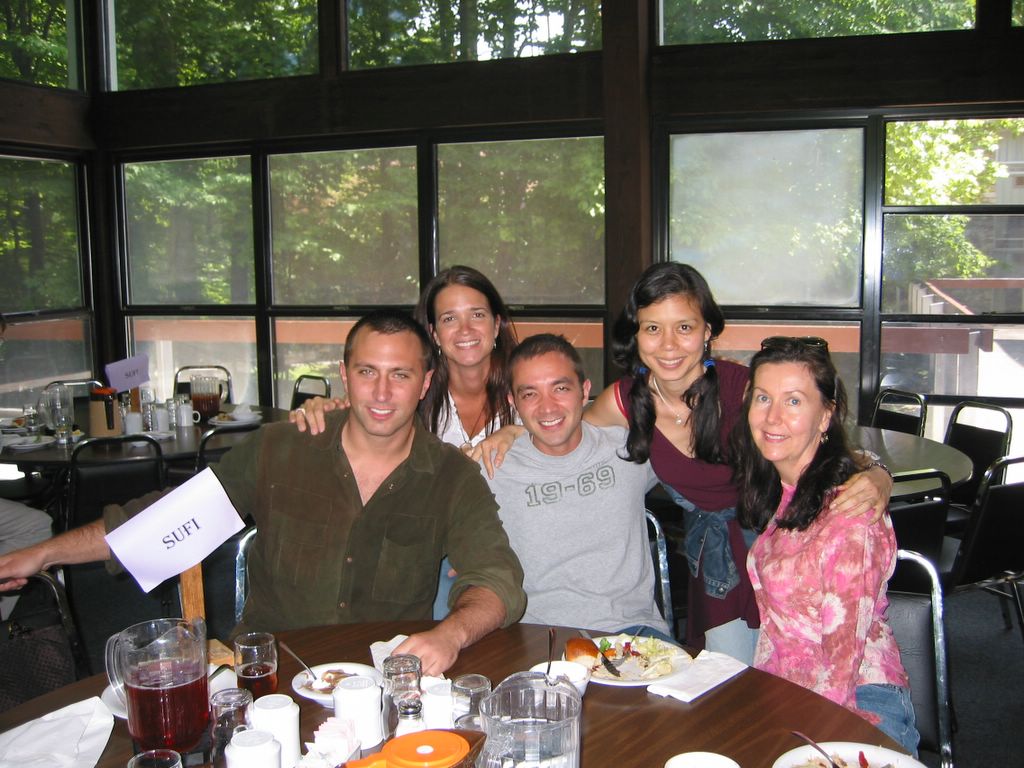
The Sufi message calls upon us to cultivate that relationship through whatever outer form, in the framework of whichever religion. Each religion is a providential dispensation that can serve to accommodate an inner opening toward the truth.
In this era in which we live, there has been a global awakening. The world is coming together in ways that have never been possible. There seems to be the prospect -- the danger, on the one hand, of a unification on the level of homogeneity, if not uniformity. On the other hand, there seems to be the prospect of a unity within diversity, a recognition of the providential nature of the diversity of religious forms, but awakening to the essential unity that pervades and underlies them.
That is the essential goal of the Sufi message in our time -- to unite the segments of humanity, which are like organs of a single body that has become dismembered and that must reunite through the guidance of the heart to function as a single body for the sake of the health of all of the different parts. That is the message that must be heard in this era.
- Pir Zia Inayat Khan
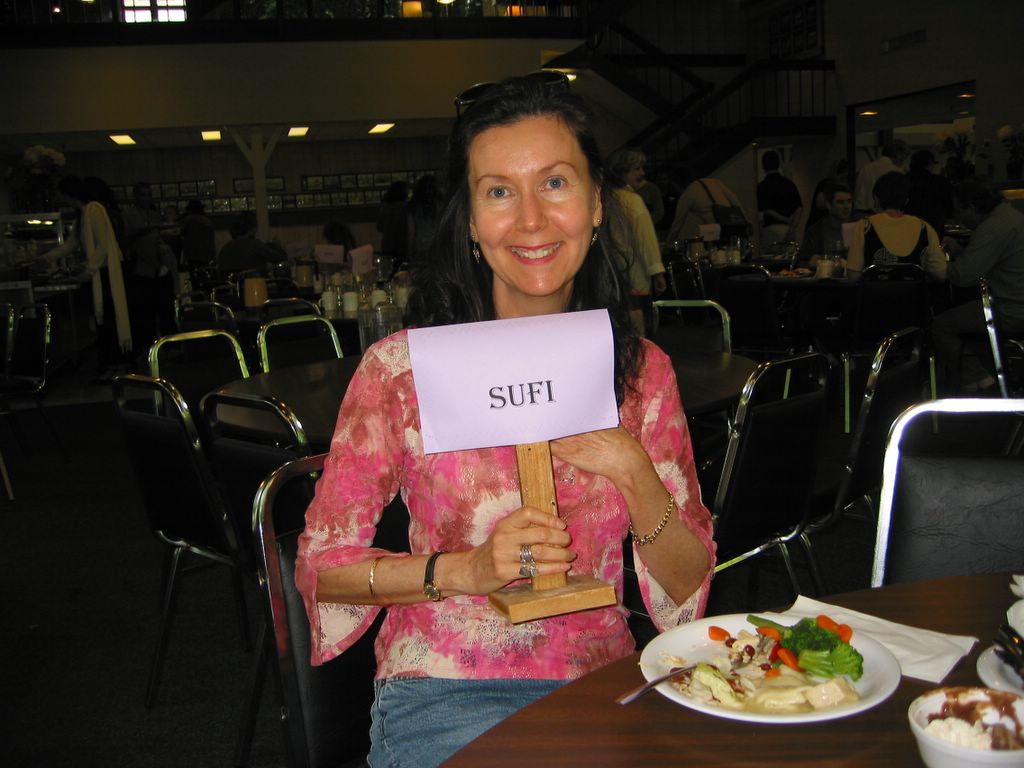
The fundamental mode of knowing in Sufism is called "knowledge by presence." All other knowledge is knowledge by correspondence, which refers to conceptual knowledge. But conceptual knowledge itself must be grounded in a fundamental, epistemological act, and that is knowledge through presence -- the knowledge of immediacy, of direct experience, the unification of witness and witnessed. This is what is experienced essentially in the depths of meditation. This gives one a faith that is unshatterable.
- Pir Zia Inayat Khan
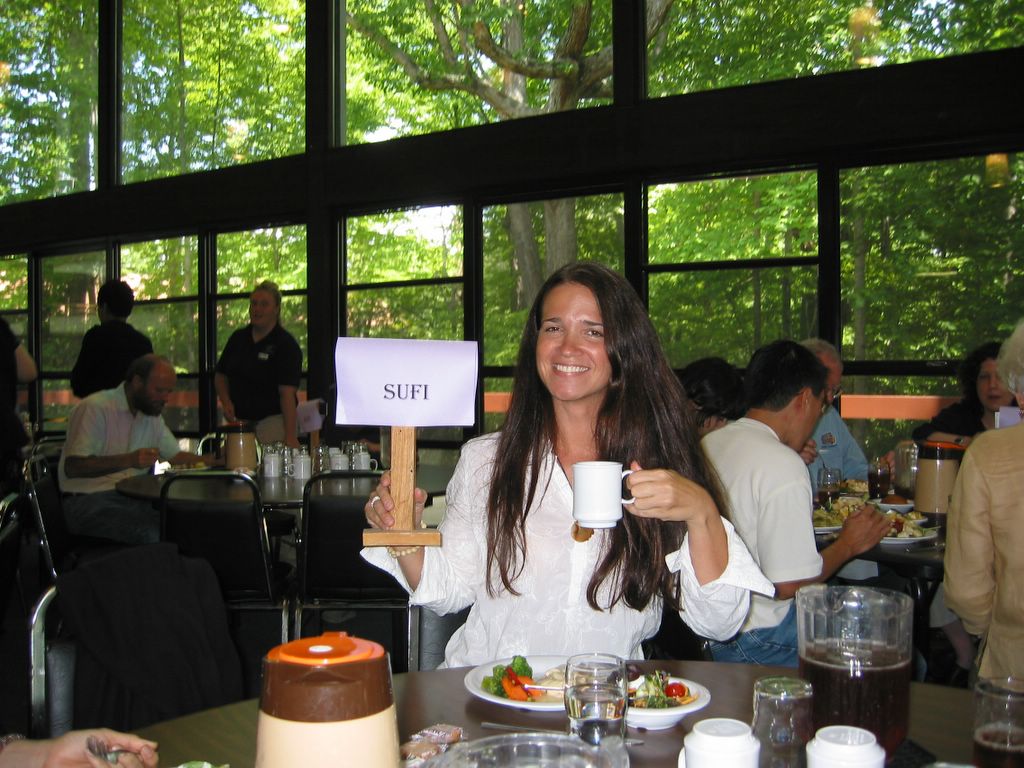
Sufism is fundamentally experiential. It is not based on intellectual premises. It is based on direct, personal experience. And so we seek not to discover the truth through book learning but, rather, through reading the manuscript of our own selves and thereby having a direct personal experience. Any faith based merely on speculation will be subject to doubt when the speculation upon which it is based is cast into question. But there is an essential conviction that comes with immediate inner experience, when mystical experience is of such a degree that it is more tangible than the outer world, which is the source of our consensus reality. When that realization is experienced, one arrives at a level of faith that goes beyond the faith of conventional religion -- having been brought up a certain way and, therefore, one believes certain articles of faith.
- Pir Zia Inayat Khan


10 Sufi Thoughts
by Hazrat Inayat Khan

1) There is one God, the Eternal, the Only Being; none else exists save God.
2) There is one Master, the Guiding Spirit of all souls, who constantly leads all followers towards the light.
3) There is one Holy Book, the sacred manuscript of nature, which truly enlightens all readers.
4) There is one Religion, the unswerving progress in the right direction towards the ideal, which fulfils the life's purpose of every soul.
5) There is one Law, the law of Reciprocity, which can be observed by a selfless conscience together with a sense of awakened justice.
6) There is one human Brotherhood, the Brotherhood and Sisterhood which unites the children of earth indiscriminately in the Fatherhood of God.
7) There is one Moral Principle, the love which springs forth from self-denial, and blooms in deeds of beneficence.
8) There is one Object of Praise, the beauty which uplifts the heart of its worshipper through all aspects from the seen to the unseen.
9) There is one Truth, the true knowledge of our being within and without which is the essence of all wisdom.
10) There is one Path, the annihilation of the false ego in the real, which raises the mortal to immortality and in which resides all perfection.
1) There is one God, the Eternal, the Only Being; none else exists save God.
2) There is one Master, the Guiding Spirit of all souls, who constantly leads all followers towards the light.
3) There is one Holy Book, the sacred manuscript of nature, which truly enlightens all readers.
4) There is one Religion, the unswerving progress in the right direction towards the ideal, which fulfils the life's purpose of every soul.
5) There is one Law, the law of Reciprocity, which can be observed by a selfless conscience together with a sense of awakened justice.
6) There is one human Brotherhood, the Brotherhood and Sisterhood which unites the children of earth indiscriminately in the Fatherhood of God.
7) There is one Moral Principle, the love which springs forth from self-denial, and blooms in deeds of beneficence.
8) There is one Object of Praise, the beauty which uplifts the heart of its worshipper through all aspects from the seen to the unseen.
9) There is one Truth, the true knowledge of our being within and without which is the essence of all wisdom.
10) There is one Path, the annihilation of the false ego in the real, which raises the mortal to immortality and in which resides all perfection.
Subscribe to:
Posts (Atom)

